
Call coverage is a consequential part of many nurse practitioner employment agreements. Call obligations can affect workload, compensation, malpractice exposure, supervision requirements, and long-term career mobility. Understanding the schedule, clinical duties, available support, and payment structure before signing helps an NP identify obligations that may not be apparent from broad “on-call” language.
Key Takeaways
- Call provisions should define when the NP must be available, the expected response time, the services covered, and whether in-person attendance may be required.
- The agreement should address call frequency, schedule notice, coverage at additional locations, and limits on unilateral changes.
- Call compensation may involve a stipend, hourly pay, per-encounter compensation, RVU credit, or a share of collections.
- Malpractice coverage, tail responsibility, physician backup, documentation duties, and escalation procedures should apply clearly during call.
- Call requirements should be reviewed together with productivity targets, termination rights, repayment obligations, and restrictive covenants.
What Call Coverage Means for Nurse Practitioners
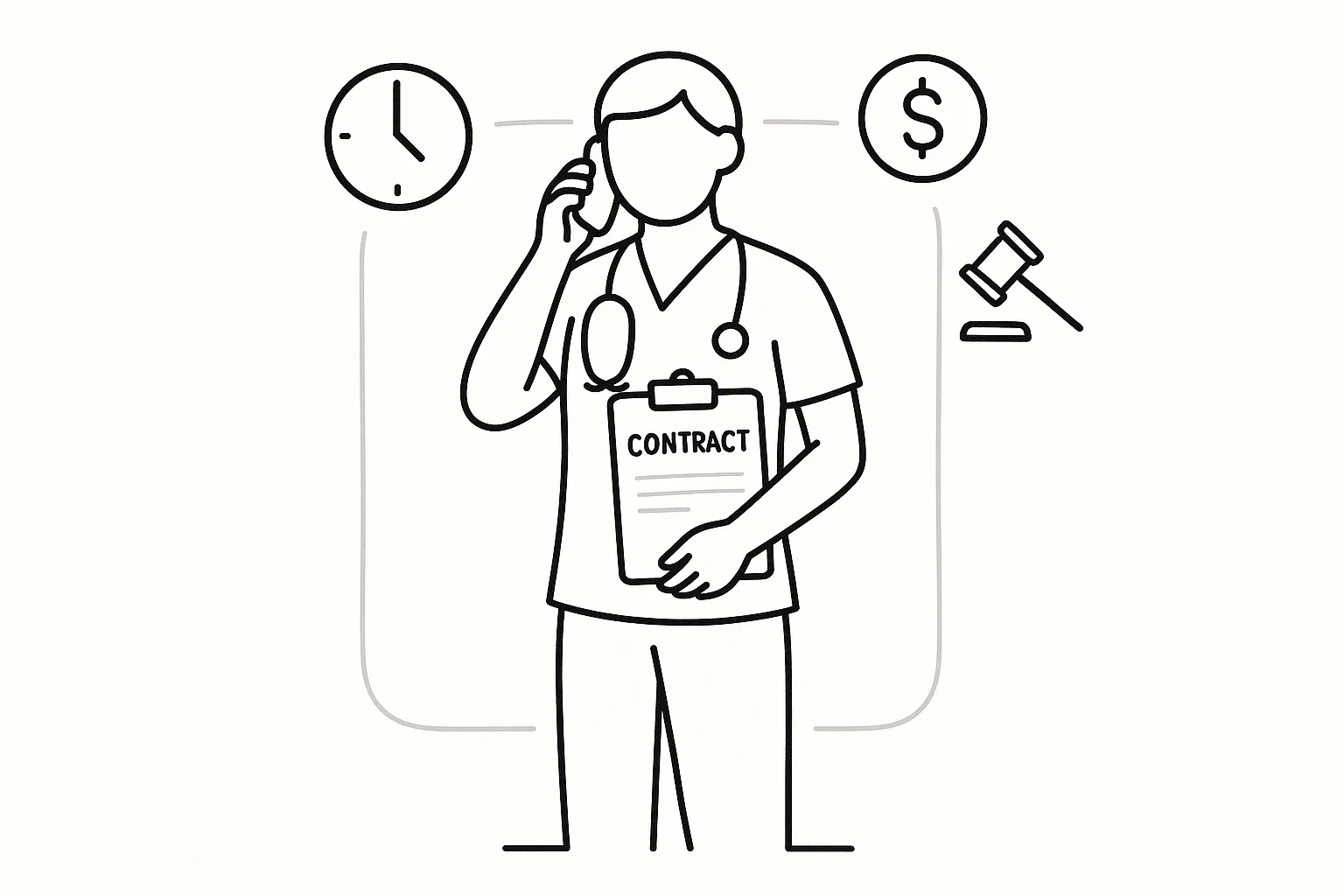
Call coverage may be framed as a duty to remain available after scheduled clinical hours, respond to designated patient needs, or cover a particular facility, geographic area, or service line. The agreement should explain when the NP must be reachable, whether telephone triage is sufficient, when an in-person evaluation is required, and which patients or facilities fall within the obligation.
These provisions also interact with compensation, productivity, and liability. An NP may receive a salary, separate call stipend, per-encounter payment, collections credit, or RVU credit, but the value of those arrangements depends on how encounters are documented, billed, and attributed. A focused review of compensation and productivity terms can identify whether mandatory call makes stated targets harder to achieve or creates negative-accrual risk.
Employer-favorable contracts may define call broadly, leave scheduling to the employer’s discretion, or omit meaningful limits on added locations and duties. Clear language is especially important when call affects outside employment, family obligations, clinical fatigue, or the NP’s ability to satisfy other performance requirements.
Common Nurse Practitioner Call Arrangements
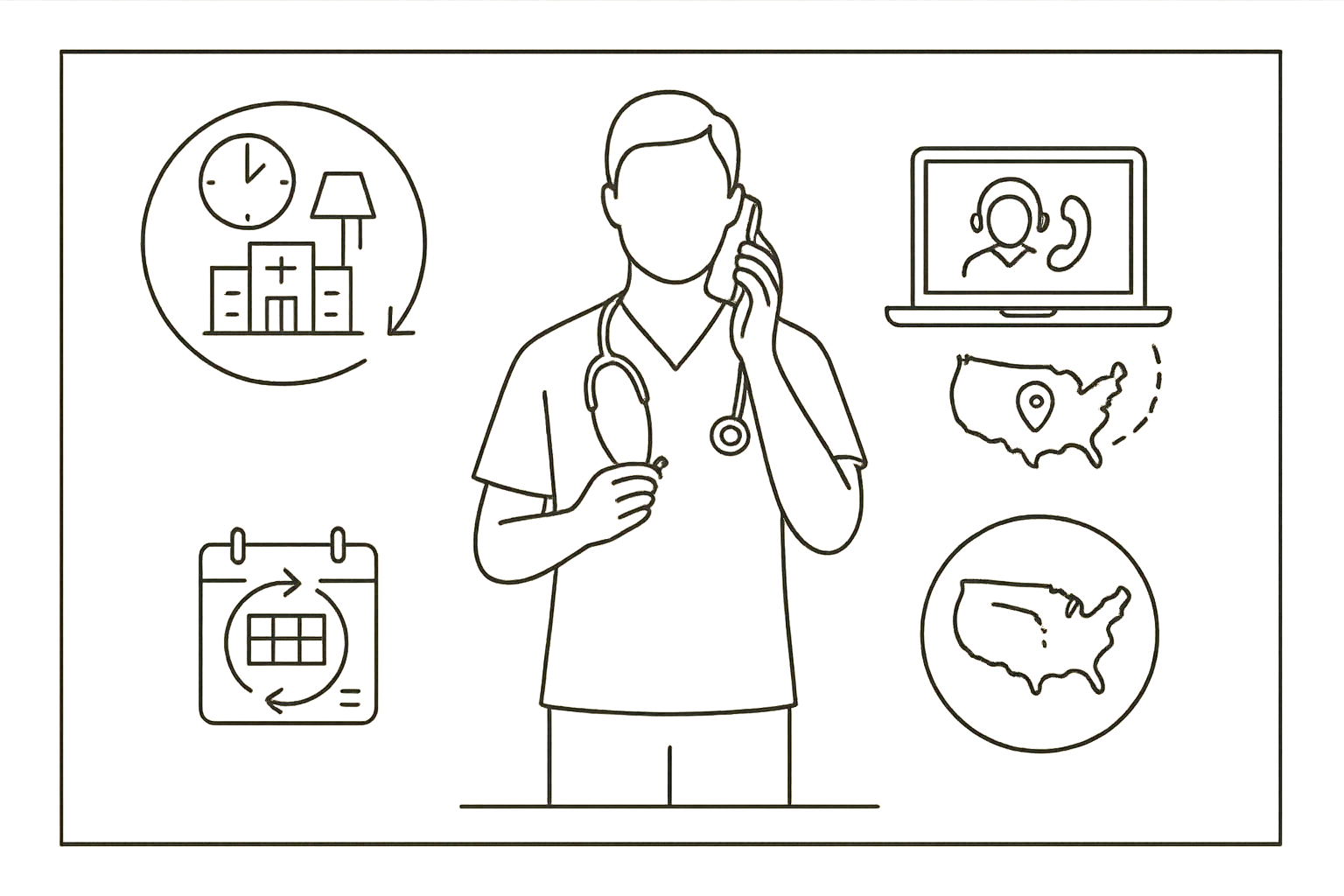
Home Call and In-House Call
Home call generally requires the NP to remain reachable and return to a facility when necessary, while in-house call requires physical presence at the workplace. The label used in the contract is less important than the actual obligations, response-time requirements, expected volume, and frequency of in-person returns.
An arrangement described as home call may function more like an in-house shift if late-night calls and return visits are routine. The contract should distinguish standby availability from time spent handling calls, documenting care, traveling, or treating patients.
Rotating Call Pools and Fixed Shifts
A rotating pool distributes call among clinicians on a weekly, biweekly, monthly, or other recurring schedule. A shift-based model assigns call during defined periods. In either model, the agreement should address rotation methodology, coverage when another clinician is unavailable, holiday expectations, and the amount of notice provided before assignments change.
Vague rotation language can produce an unpredictable burden when staffing levels change. NPs should determine whether their responsibility is stated as a fixed number of shifts, an equal share of a pool, or any amount the employer considers necessary.
Telehealth and Remote Triage Call
Remote call may include telephone triage, electronic messages, follow-up visits, prescription management, and video encounters. The agreement should explain which activities count as call work, how they are documented, and whether they generate separate compensation or productivity credit.
Remote care can also create licensing, location, supervision, and malpractice questions when the patient and clinician are in different states. NPs whose call duties include virtual care should examine the related telehealth contract terms rather than assuming that ordinary call language addresses those issues.
Call Scheduling, Compensation, and Productivity
A workable call clause should define frequency, schedule-posting procedures, response windows, required locations, and circumstances permitting reassignment. It should also address notice for schedule changes and what happens when staffing shortages, emergencies, or new facilities increase the coverage burden. Language allowing unlimited changes at the employer’s discretion can make the practical commitment substantially different from what the NP expected when accepting the position.
Call pay may be structured as a flat stipend, hourly compensation, a per-encounter rate, RVU credit, or a percentage of collections. Each model presents different risks. A stipend may not account for high-volume nights, while RVU and collections models depend on accurate coding, billing, attribution, and reconciliation. The contract should state whether call pay is additional to base salary, when it is paid, how canceled or traded shifts are handled, and whether chargebacks or negative accrual can reduce earned compensation.
Mandatory call should also be compared with productivity expectations. If call work reduces scheduled clinic time or generates encounters that do not count toward a bonus, the NP may carry an uncompensated burden while still being measured against the same target. The agreement should explain whether after-hours encounters receive credit and who controls the underlying billing data.
Malpractice Coverage, Supervision, and Operational Support
Call duties should fall within the employer’s malpractice coverage and the NP’s authorized clinical role. The contract should identify whether the policy is occurrence or claims-made coverage, whether call at additional sites is included, and who is responsible for tail insurance when employment ends. A malpractice and tail insurance review can identify exclusions, coverage gaps, and termination-related costs that broad benefit summaries may not reveal.
Supervision and collaboration requirements also need to work outside ordinary office hours. The agreement and applicable policies should identify the physician or other escalation resource available during call, how quickly support should be accessible, and what happens when the assigned clinician cannot respond. These terms should be considered alongside any separate supervision or collaboration agreement.
Operational details matter as well. NPs should understand handoff procedures, electronic medical record expectations, call logs, follow-up responsibility, secure communication tools, paging systems, and access to ancillary staff. The contract or incorporated policies should also address reimbursement for required phones, travel, remote-monitoring tools, and other call-related expenses.
Negotiating Limits and Protecting Career Mobility
Useful negotiating points may include a maximum number of call shifts, defined rotation rules, limits on coverage at multiple sites, reasonable notice before reassignment, and a mechanism for additional compensation when the burden materially increases. The agreement should also explain whether call obligations change with a reduced schedule, leave of absence, or change in full-time status.
Classification can affect how compensation, expenses, benefits, and schedule control are treated. A contract calling an NP an independent contractor does not by itself resolve every classification question, particularly when the organization controls call assignments and working conditions. Reviewing the practical differences between W-2 and 1099 arrangements for nurse practitioners can help place the call provision in context.
Call obligations may also intersect with non-competes, signing-bonus repayment, relocation reimbursement, and other post-employment restrictions. The NP should determine whether a change in call duties permits termination, whether repayment is triggered by resignation, and whether a broad geographic restriction is tied to every location covered while on call. Both non-compete language and the agreement’s termination provisions should be evaluated before the NP relies on an ability to leave an unsustainable call arrangement.
When a Call Coverage Clause Needs Legal Review
Potential warning signs include an undefined “on-call” obligation, unlimited employer discretion to change schedules, mandatory coverage at unspecified sites, unclear compensation, claims-made malpractice insurance without an identified tail obligation, and productivity targets that disregard after-hours work. Misclassification language, unilateral amendment clauses, broad restrictive covenants, and repayment provisions tied to resignation may increase the financial consequences of a demanding call schedule.
An attorney-led contract review can trace the call clause through the agreement’s compensation, malpractice, supervision, termination, and restrictive-covenant provisions. That analysis should clarify the expected workload, identify language that permits material changes, evaluate how call affects income, and propose targeted revisions designed to protect the NP’s compensation, license, and future practice options.
Frequently Asked Questions
What should a nurse practitioner call coverage clause define?
The clause should define the call schedule, frequency, response time, covered patients and locations, required clinical services, in-person return expectations, available backup, documentation duties, and compensation method. It should also explain how and when the employer may change those requirements.
Is home call the same as in-house call?
No. Home call generally requires the NP to remain reachable and return when needed, while in-house call requires physical presence at the facility. The actual workload and response requirements should be reviewed because frequent calls or return visits can make home call substantially more demanding than its label suggests.
How can a nurse practitioner be paid for call coverage?
Call compensation may be a flat stipend, hourly pay, a per-encounter rate, RVU credit, collections-based compensation, or part of a fixed salary. The contract should state how the payment is calculated, when it is paid, and whether call compensation is additional to base pay.
Should call encounters count toward productivity targets?
The agreement should expressly state whether call encounters generate RVUs, collections credit, or other productivity credit. Without clear attribution rules, an NP may perform required after-hours work that does not help satisfy the contract’s productivity threshold.
What malpractice terms matter for nurse practitioner call coverage?
The NP should confirm that call duties and all covered locations fall within the policy, determine whether coverage is occurrence or claims-made, and identify who pays for tail insurance when required. The agreement should also address physician backup and escalation procedures during call.
Can an employer change an NP’s call schedule after the contract is signed?
The answer depends on the agreement’s scheduling and amendment language. A contract may reserve some operational flexibility, but defined limits, notice requirements, and additional-compensation provisions can reduce the risk of a material increase in call duties without the NP’s consent.
Have an Attorney Review Your NP Call Requirements
Chelle Law reviews nurse practitioner contracts for scheduling, compensation, malpractice, supervision, termination, and mobility risks before the agreement is signed.
Contact Chelle LawExplore Nurse Practitioner Contract Guidance
Review legal services, practical contract resources, and state-specific guidance for nurse practitioners.