
Terminating a nurse practitioner contract raises immediate professional, financial, and legal concerns. Whether the employer initiates termination, the NP resigns, or either party alleges a breach, the agreement’s language determines notice obligations, repayment triggers, insurance exposure, and post-employment restrictions. A prompt review can clarify the effective termination date, final compensation, malpractice coverage, and practical steps needed to protect income and professional standing.
Key Takeaways
- Review the termination, notice, severance, repayment, malpractice, and restrictive covenant provisions immediately.
- Preserve termination notices, performance records, productivity reports, and communications that may affect a for-cause allegation or compensation dispute.
- Confirm whether malpractice coverage is claims-made or occurrence-based and who must purchase tail coverage after employment ends.
- Calculate potential bonus, relocation, loan assistance, and negative accrual repayment obligations before signing a separation agreement.
- Seek legal review promptly when the employer alleges cause, demands repayment, threatens enforcement of a restrictive covenant, or presents a release of claims.
Types of Nurse Practitioner Contract Termination
For-Cause Termination
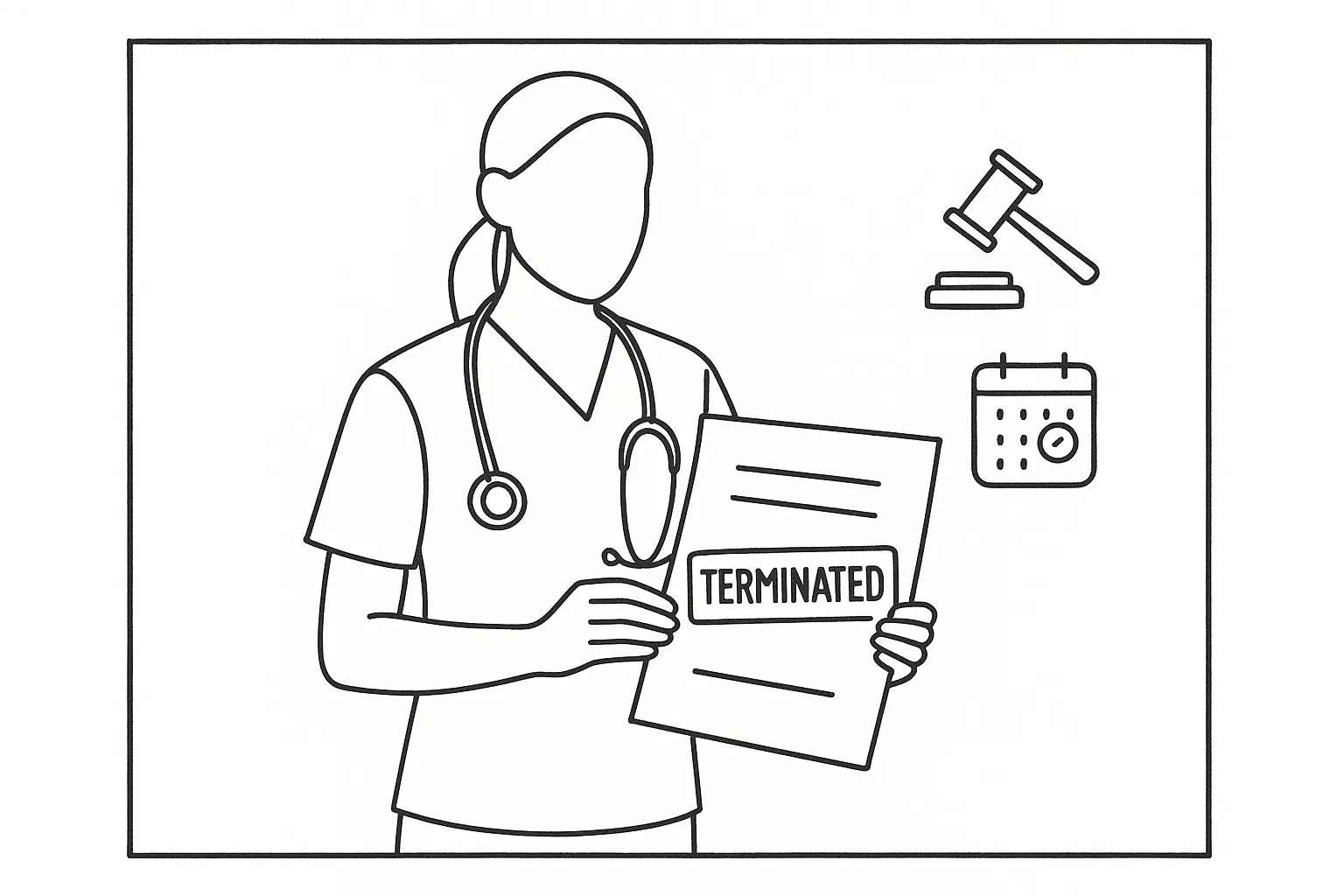
For-cause termination clauses identify circumstances in which an employer may dismiss an NP immediately or through an abbreviated process. Listed grounds may include a material breach, professional misconduct, certain criminal conduct, patient abuse, loss of a required license, or repeated failure to satisfy defined duties. The practical risk depends on the clause’s precision, the applicable standard, and whether the NP receives notice, an investigation, or an opportunity to cure the alleged breach.
A for-cause determination may eliminate severance, accelerate repayment obligations, affect clinical privileges, or create reporting concerns. Because the consequences can extend beyond the final paycheck, the employer’s stated grounds should be compared carefully with the contract’s definitions and procedures.
Without-Cause Termination
Without-cause termination permits either party, or sometimes only the employer, to end the relationship without proving a breach. The provision should state the required notice period, whether the employer can pay in lieu of notice, and how compensation and benefits are handled through the effective date. The related guide to NP without-cause termination explains why these mechanics matter even when neither party alleges wrongdoing.
Productivity compensation can complicate an otherwise straightforward termination. An NP paid through collections or RVUs may lose an unvested bonus, face a final reconciliation, or dispute whether post-termination collections count toward earned compensation. A focused review of compensation and productivity terms can identify how the final measurement period and any negative balance will be calculated.
Resignation, Constructive Discharge, and Mutual Separation
A resignation provision establishes how much notice the NP must provide and whether inadequate notice affects compensation or creates a claimed breach. Resignation may also activate repayment provisions, non-solicitation duties, or a non-compete. Constructive discharge is a separate legal concept that may arise when materially adverse working conditions allegedly force a resignation, but its application depends on the facts and governing law.
The parties may instead sign a mutual separation agreement addressing severance, releases, malpractice coverage, repayment obligations, and reference language. That approach can replace disputed obligations with defined terms, but the agreement should be reviewed carefully before the NP waives claims or accepts new restrictions.
Contract Clauses to Review Before Employment Ends
Notice, Severance, and Repayment Terms
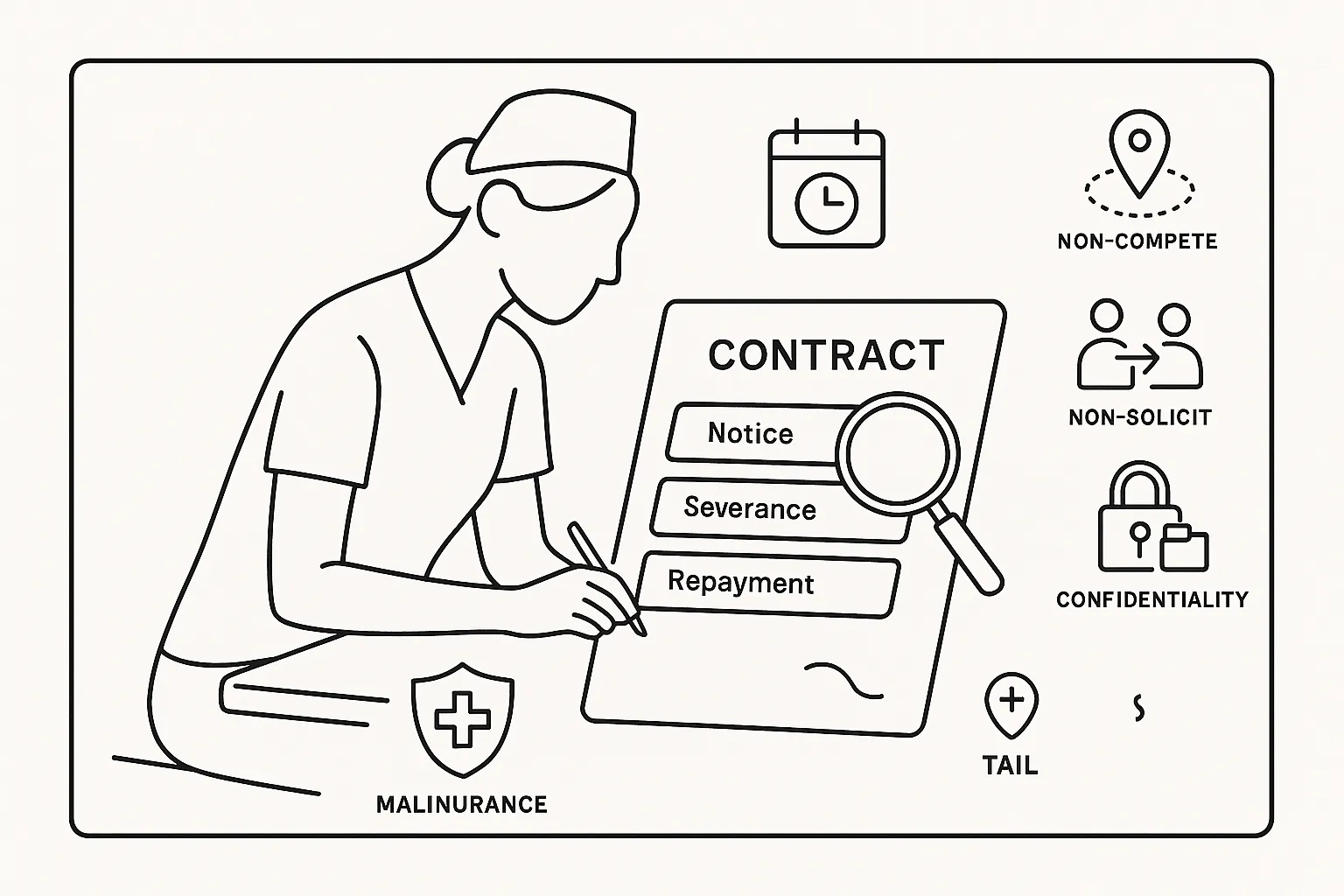
Locate the termination, notice, severance, and repayment provisions as soon as termination is anticipated or notice is received. Determine when notice becomes effective, whether employment continues during the notice period, and whether either party can shorten that period. Severance language should be checked for eligibility conditions, payment timing, and any required release of claims.
Repayment or clawback clauses may apply to signing bonuses, relocation assistance, student loan support, training expenses, or advanced continuing education funds. The trigger may differ depending on whether the NP resigns, is terminated without cause, or is terminated for cause. The details of signing bonus repayment provisions should be reviewed before accepting the employer’s calculation or payment deadline.
Non-Compete, Non-Solicitation, and Confidentiality Clauses
Post-employment restrictions may limit where the NP can work, which patients or employees may be contacted, and how confidential information can be used. The practical effect depends on the duration, geographic area, restricted activities, patient categories, and applicable state law. A broad restriction can delay a new position even when its ultimate enforceability is uncertain.
Because non-compete law and enforcement vary, a nurse practitioner non-compete review should evaluate both the written restriction and the NP’s intended next role. Confidentiality obligations commonly survive termination, but they should not be interpreted as permission to retain patient records, employer data, or other protected materials.
Malpractice Coverage and Tail Insurance
Determine whether the malpractice policy is claims-made or occurrence-based. Occurrence coverage generally responds to covered events that occurred during the policy period even if a claim is made later. Claims-made coverage generally requires the policy or applicable extended reporting coverage to be in effect when the claim is reported.
If the employer’s claims-made policy ends with employment, tail coverage may be necessary for prior clinical services. The contract should identify who must obtain and pay for that coverage and whether responsibility changes based on the reason for termination. A dedicated malpractice and tail insurance review can clarify this potentially significant separation expense.
Immediate Steps After Receiving Termination Notice
Preserve the complete agreement and all amendments, offer letters, termination notices, performance plans, productivity reports, bonus statements, and relevant communications. Create a factual timeline and keep communications professional. Do not delete records or remove patient information, proprietary data, or documents that the NP is not authorized to retain.
- Protect patient care: Complete authorized handoffs, document pending clinical matters, and follow applicable professional and employer requirements through the termination date.
- Request a final compensation statement: Confirm salary, earned incentives, productivity reconciliations, PTO treatment, deductions, and the timing of final payment.
- Verify benefits and coverage: Ask for written information about benefit continuation, retirement contributions, malpractice coverage, and any required tail policy.
- Confirm administrative status: Address credentialing, payer enrollment, return of employer property, and access to records needed to verify compensation without retaining protected information improperly.
Financial, Licensing, and Litigation Risks
Clawbacks and Bonus Forfeiture
Signing bonuses, relocation assistance, loan support, and other incentives may be repayable if employment ends during a stated period. Productivity plans may also impose a negative accrual or withhold an unvested bonus. The employer’s demand should be compared with the exact trigger, proration formula, calculation records, and any distinction between resignation and employer-initiated termination.
Restrictive Covenant Disputes
An employer may seek an injunction or damages when it believes an NP has violated a non-compete or non-solicitation clause. Even before litigation, a restriction may affect credentialing or a prospective employer’s willingness to proceed. Early review can help define the restricted area and activity, assess applicable state law, and identify whether a written waiver or narrower separation term is possible.
Licensing, Credentialing, and Professional Reporting
Allegations involving professional misconduct, patient safety, licensing, or clinical privileges may create issues beyond the employment contract. Depending on the circumstances and applicable requirements, a termination may affect credentialing or lead to reporting and investigation. The NP should avoid making rushed written admissions and should obtain appropriate advice when the stated reason for termination could affect a license, privileges, payer participation, or future applications.
Negotiating an Exit and Seeking Legal Review
Terms to Address in a Separation Agreement
A negotiated separation can address severance, final productivity compensation, repayment amounts, malpractice tail coverage, restrictive covenants, return of property, and reference language. Any release should be evaluated alongside what the NP receives in return. The agreement should also avoid ambiguity about the termination date, payment deadlines, continuing obligations, and whether either party may make future claims.
When an Attorney Should Review the Termination
Prompt legal review is particularly important when an employer alleges cause, demands immediate repayment, disputes earned compensation, refuses to address tail coverage, threatens a restrictive covenant, or presents a separation agreement containing releases. Bring the full contract and amendments, termination documents, performance materials, productivity reports, payment calculations, malpractice declarations, and a chronological summary. Chelle Law’s NP contract termination review focuses on identifying financial exposure, post-employment restrictions, insurance obligations, and practical next steps.
Frequently Asked Questions
How much notice must a nurse practitioner give before resigning?
The required notice period depends on the contract. Review how notice must be delivered, when it becomes effective, whether the employer can waive the remaining period, and what happens to compensation or benefits if the NP leaves early.
Can an employer terminate an NP contract without cause?
An employer may terminate without cause when the agreement grants that right and the employer follows the applicable notice and payment terms. The contract should be checked for pay in lieu of notice, final bonus calculations, benefit treatment, and obligations that continue after termination.
Does termination require repayment of a signing bonus?
Repayment depends on the bonus provision’s trigger, service period, proration formula, and treatment of resignation, without-cause termination, and for-cause termination. The employer’s demand should be compared with the written agreement and supporting calculation.
Who pays for malpractice tail coverage after termination?
The contract should state whether the employer or NP pays for tail coverage and whether responsibility changes based on how employment ends. Tail coverage is generally relevant when the underlying policy is claims-made rather than occurrence-based.
Can a non-compete apply after the employer terminates the contract?
Some contracts apply the non-compete regardless of which party ends the relationship, while others contain exceptions. Enforceability and practical risk depend on the contract language, the restriction’s scope, the facts, and applicable state law.
Should an NP sign a separation agreement immediately?
An NP should understand the payment terms, releases, restrictive covenants, malpractice obligations, confidentiality provisions, and other continuing duties before signing. Legal review is especially important when the agreement waives claims or changes obligations in the original contract.
Review Your NP Contract Termination Terms
Chelle Law reviews notice requirements, compensation reconciliations, repayment provisions, malpractice coverage, and post-employment restrictions before you respond or sign a separation agreement.
Contact Chelle LawExplore Nurse Practitioner Contract Guidance
Review legal services, practical resources, and state-specific information for nurse practitioner agreements.