
Signing bonuses are common in nurse practitioner employment offers, especially for new graduates, hospital hires, and roles requiring relocation. Although a bonus can increase compensation at the beginning of employment, a repayment provision buried in the agreement can create substantial financial exposure later. A careful nurse practitioner contract review can clarify the repayment triggers, timelines, remedies, and related restrictions before you accept the offer.
Key Takeaways
- Identify the exact events that trigger repayment, including resignation, termination for cause, and failure to meet productivity requirements.
- Confirm whether the bonus is characterized as income, a loan, or an advance because that language may affect taxes, remedies, and collection rights.
- Seek a clearly defined pro rata repayment schedule rather than an all-or-nothing clawback.
- Review any interest, collection-cost, acceleration, payroll-deduction, or setoff provisions that could increase the amount owed.
- Request exceptions for an employer breach, termination without cause, or other circumstances outside the nurse practitioner’s control.
What a Signing Bonus Repayment Clause Means
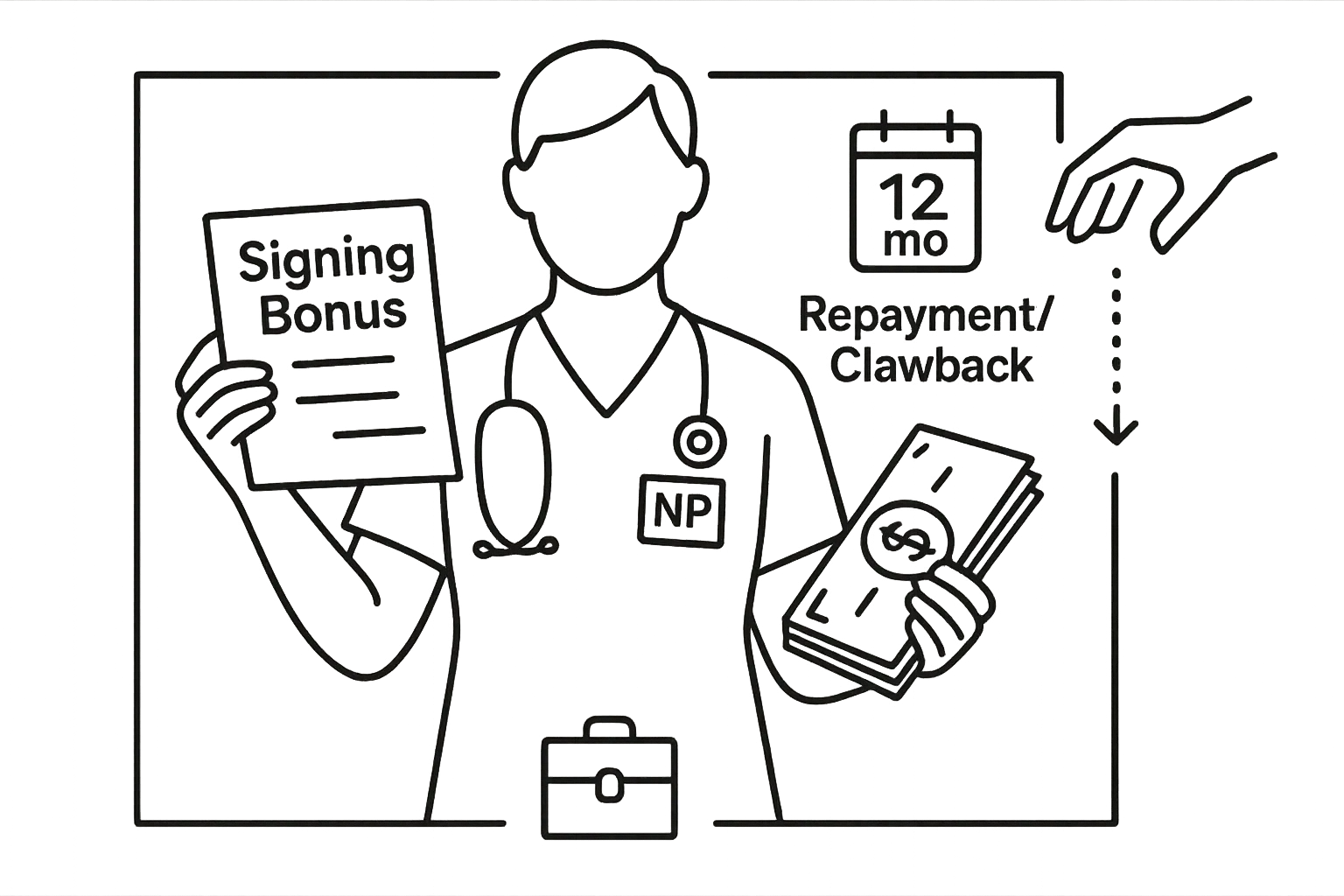
A signing bonus repayment clause, sometimes called a clawback, recoupment provision, or repayment obligation, requires the nurse practitioner to return some or all of a previously paid bonus after a defined event. Employers use these provisions to protect recruitment investments, particularly when they provide substantial upfront compensation, relocation assistance, or other incentives tied to a service commitment.
The clause affects more than the advertised value of the offer. Its wording can influence take-home pay, post-termination liquidity, and career mobility, especially when it operates alongside short notice periods, broad definitions of cause, or restrictive covenants. For example, an NP who receives a $15,000 bonus subject to a 12-month service requirement could owe the entire amount after an early resignation if the agreement contains a full, non-prorated clawback.
Repayment risk should therefore be evaluated in the context of the entire employment agreement. The practical consequences may depend on the contract’s termination provisions, compensation terms, malpractice obligations, and any non-compete restrictions that could limit the NP’s next employment opportunity.
Common Events That Trigger Bonus Repayment
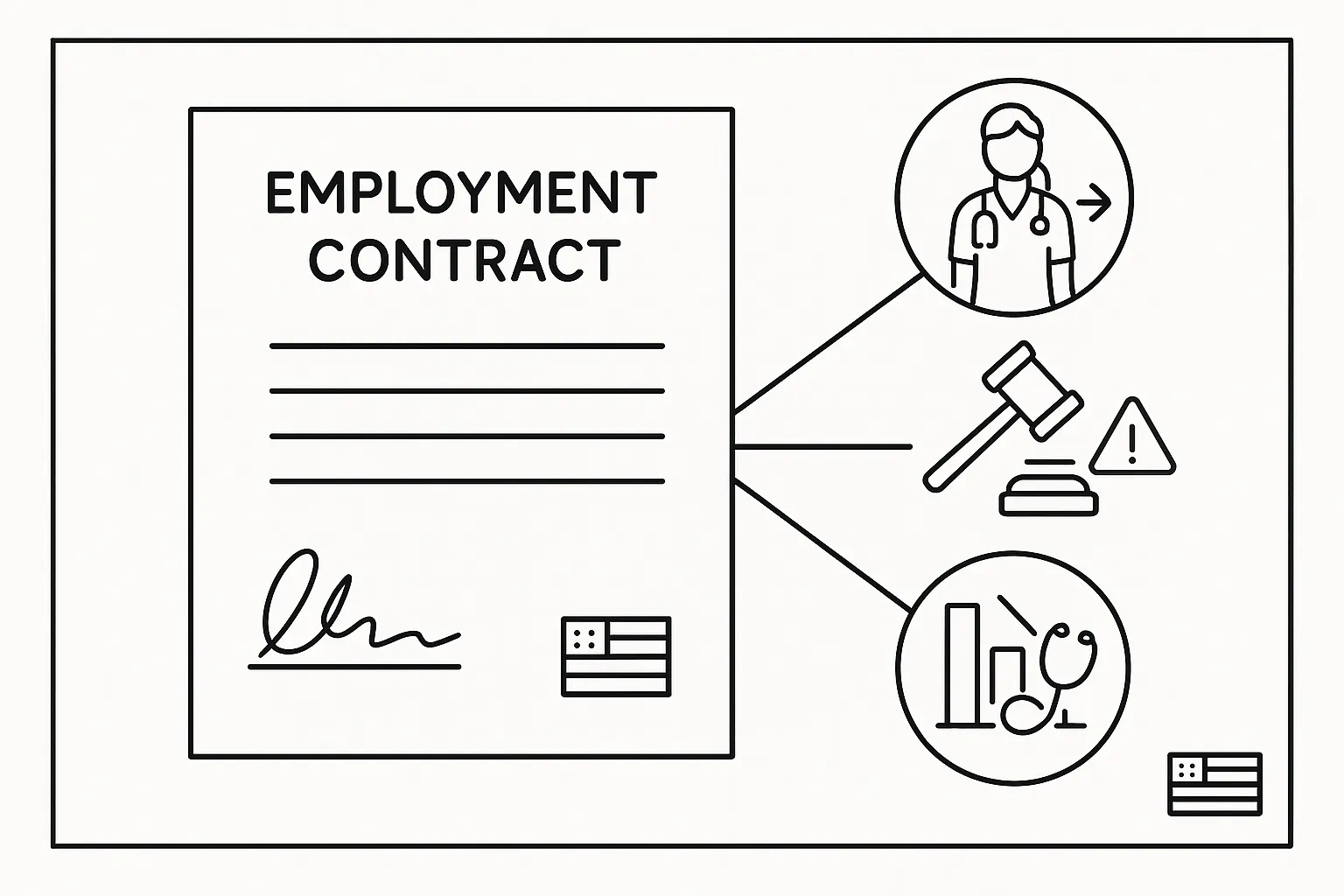
Resignation or termination: Repayment obligations often vary according to how employment ends. Some contracts require repayment after a voluntary resignation or termination for cause, while broader clauses apply after termination for almost any reason. An NP should determine whether the obligation is waived when the employer terminates without cause, eliminates the position, or materially breaches the agreement.
Breach or professional misconduct: Agreements may trigger repayment after a contract breach, license restriction, policy violation, or alleged professional misconduct. The risk increases when “cause” is defined through vague performance standards or minor policy violations. A carefully drafted clause should identify objective grounds and any notice or opportunity to cure before repayment becomes due.
Productivity shortfalls: Some employers connect bonus forgiveness to collections, RVUs, patient volume, or other benchmarks. These triggers deserve particular scrutiny because scheduling, credentialing, staffing, payer mix, and referral patterns can affect performance. A separate NP compensation and productivity review can help determine whether the benchmark, measurement period, and employer-controlled variables are clearly addressed.
How Repayment Amounts, Deadlines, and Offsets Work
Repayment may be structured as a full clawback, a prorated obligation, or a sliding scale. A full clawback requires the entire bonus to be repaid if employment ends within a stated period. A prorated clause reduces the balance as the NP completes the service term, while a sliding scale may forgive set percentages at specific milestones. Any schedule should identify whether the calculation begins on the hire date, clinical start date, credentialing date, or payment date.
The agreement should also state when payment is due and whether installments are available. Immediate lump-sum deadlines can create significant liquidity problems. Interest, acceleration provisions, attorney fees, and collection costs may increase the balance beyond the original bonus, so the contract should ideally cap liability and distinguish the repayment obligation from punitive damages or unrelated employer losses.
Employers sometimes reserve the right to deduct the balance from final wages, accrued paid time off, commissions, or other compensation. Whether a particular deduction is permitted can depend on the contract and applicable state wage law. Some agreements instead characterize the bonus as a loan and include a promissory note, default remedies, or acceleration terms. The NP should understand whether the amount to be repaid is the gross bonus, the net amount received after withholding, or another figure stated in the agreement.
Enforceability and State-Law Considerations
The enforceability of a signing bonus repayment clause depends on its wording, the surrounding facts, applicable contract principles, and state law. State wage statutes may restrict deductions from final wages or require specific written authorization. Interest provisions can raise separate concerns, and an excessive repayment obligation may be challenged as an unreasonable penalty depending on the jurisdiction and circumstances.
Employers may seek repayment through a direct demand, a permitted payroll deduction, a setoff against other compensation, or enforcement of a promissory note. Even when the parties dispute enforceability, the clause can create settlement pressure and legal expense. Because these rules vary, the relevant state and the agreement’s governing-law provision should be identified before conclusions are drawn. Chelle Law’s state contract review pages provide a starting point for understanding state-specific review considerations.
Protective Terms to Request During Negotiation
A repayment provision is more predictable when it uses objective triggers, a precise service period, and a formula that reduces the balance over time. Protective language should also address circumstances in which repayment would be unfair because the employer, rather than the NP, caused employment to end.
- Pro rata forgiveness: Reduce the repayment balance monthly or at clearly defined service milestones.
- Termination carve-outs: Waive repayment after termination without cause, position elimination, employer breach, or another specified event outside the NP’s control.
- Narrow cause language: Use objective grounds and provide notice and a cure period where appropriate.
- Limited remedies: Exclude interest, penalties, excessive collection costs, and deductions that are not permitted by law.
- Defined repayment procedure: State the amount, calculation method, deadline, installment rights, and treatment of taxes.
- Credentialing protection: Clarify how a delayed clinical start or other employer-controlled delay affects the forgiveness period.
These provisions should be reviewed alongside the rest of the offer rather than negotiated in isolation. Broad termination rights, restrictive covenants, repayment of relocation expenses, and tail insurance obligations can compound the same financial risk. Reviewing common nurse practitioner contract red flags can help identify provisions that deserve additional attention.
Signing Bonus Review Checklist
Before signing, identify the answers to each of the following questions. If the agreement is vague, request clarification in the contract itself rather than relying only on an informal explanation or recruiting email.
- Is the bonus treated as compensation, a loan, or an advance?
- What events trigger repayment, and are those events objectively defined?
- Is repayment full, prorated, or based on a sliding scale?
- When does the service or forgiveness period begin?
- How quickly must the balance be repaid, and are installments permitted?
- Can the employer add interest, legal fees, or collection costs?
- Does the agreement authorize deductions from final wages or other compensation?
- Are there exceptions for termination without cause, employer breach, disability, or another stated circumstance?
- How does repayment interact with termination notice, non-compete terms, relocation assistance, and malpractice obligations?
Vague triggers, full repayment without proration, unilateral employer determinations, and immediate acceleration are significant warning signs. Nurse practitioners should also consider the practical issues discussed in our guide to signing bonus repayment risks before accepting upfront compensation tied to a lengthy service commitment.
Frequently Asked Questions
Do I have to repay a signing bonus if the employer terminates me without cause?
It depends on the contract. Some agreements waive repayment after an employer-initiated termination without cause, while others broadly require repayment whenever employment ends during the service period. The exception should be stated expressly rather than assumed.
Can an employer deduct signing bonus repayment from my final paycheck?
The answer depends on the agreement and applicable state wage law. A contractual deduction clause does not necessarily override legal restrictions on withholding wages, so the deduction language and governing state requirements should be reviewed together.
Must I repay the gross bonus or only the amount I received after taxes?
The contract may require repayment of the gross amount, the net amount received, or another defined balance. Because repayment can also affect tax reporting, the agreement should be reviewed carefully and tax questions should be directed to a qualified tax professional.
What does a prorated signing bonus repayment schedule mean?
A prorated schedule reduces the amount owed as the nurse practitioner completes the required service period. The contract should state the formula, the date proration begins, and whether forgiveness occurs monthly or only at specified milestones.
Can missing a productivity target trigger signing bonus repayment?
Yes, if the agreement expressly connects bonus forgiveness to a productivity requirement. The target, measurement period, data source, and treatment of employer-controlled factors such as scheduling or credentialing should be clearly defined.
Can a signing bonus repayment clause be changed after I sign?
The parties may agree to a written amendment, but an employer is not necessarily required to accept a later change. It is generally better to negotiate repayment triggers, proration, and exceptions before signing, when the terms of the offer are still under discussion.
Review Your Signing Bonus Terms Before You Sign
Chelle Law reviews nurse practitioner agreements to explain repayment triggers, proration formulas, termination consequences, and other provisions that can affect your compensation and career mobility.
Contact Chelle Law