
Scope of practice language in nurse practitioner (NP) employment and independent contractor agreements often determines the practical limits of clinical autonomy, compensation opportunity, liability exposure, and long-term career mobility. This guide explains the contract terms that intersect with state regulatory frameworks, how those provisions create professional and financial risk, and when an attorney-led nurse practitioner contract review may help before signing.
Key Takeaways
- Scope of practice language directly shapes clinical autonomy, compensation, liability exposure, and post-termination mobility, so each clause should be evaluated for its practical effect.
- Contract terms should be compared with the applicable state’s regulatory baseline and reviewed for private employer requirements that exceed or conflict with that baseline.
- Supervision mechanics, prescriptive authority, credentialing, privileging, and productivity expectations should be clearly defined rather than left to unilateral employer policies.
- Malpractice coverage, restrictive covenants, repayment obligations, and termination terms can extend the consequences of scope-related provisions beyond the employment period.
- A line-by-line legal review can identify ambiguous or one-sided terms and explain how they interact with state law and the NP’s intended clinical role.
Why Scope of Practice Language Matters in NP Contracts
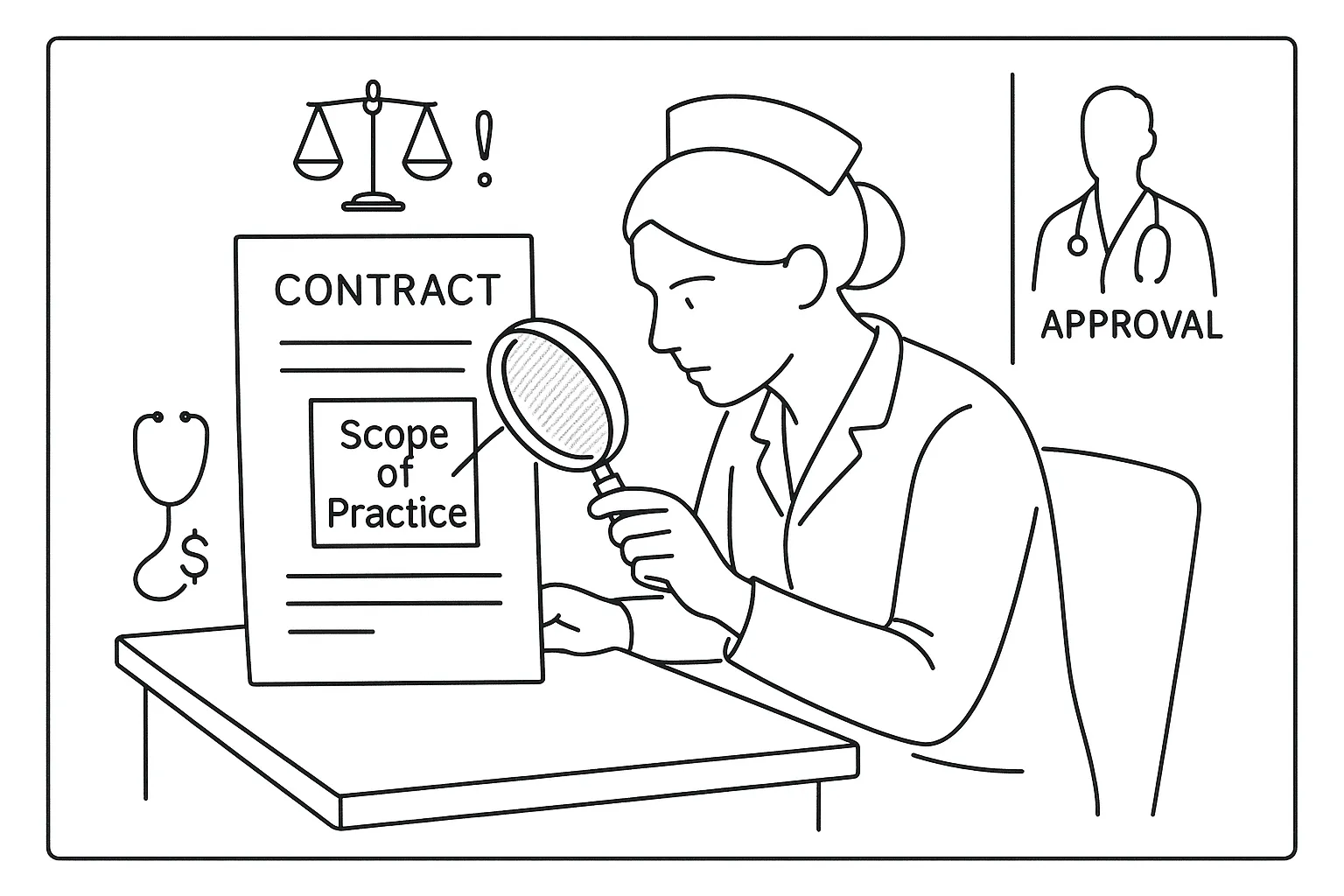
Scope of practice clauses are not abstract policy statements. They allocate authority and operational constraints that materially affect an NP’s daily work and career trajectory. Language that appears neutral can limit clinical autonomy by requiring physician approval for particular procedures, restrict where the NP may practice, or condition compensation on activities that may not be permitted by the NP’s license or credentials.
Employer-favorable drafting may preserve institutional control over practice patterns and quality metrics while leaving the NP responsible for regulatory compliance and malpractice exposure. The practical consequences can include reduced authority to treat patients, lost revenue when privileges are delayed or withheld, and unexpected liability when supervision or collaboration arrangements are ambiguous.
Scope provisions should therefore be evaluated alongside compensation, supervision, malpractice insurance, and termination clauses. A complete review connects the contract language to state law, employer operations, and the NP’s actual duties rather than assessing each provision in isolation.
State Scope of Practice and Regulatory Requirements
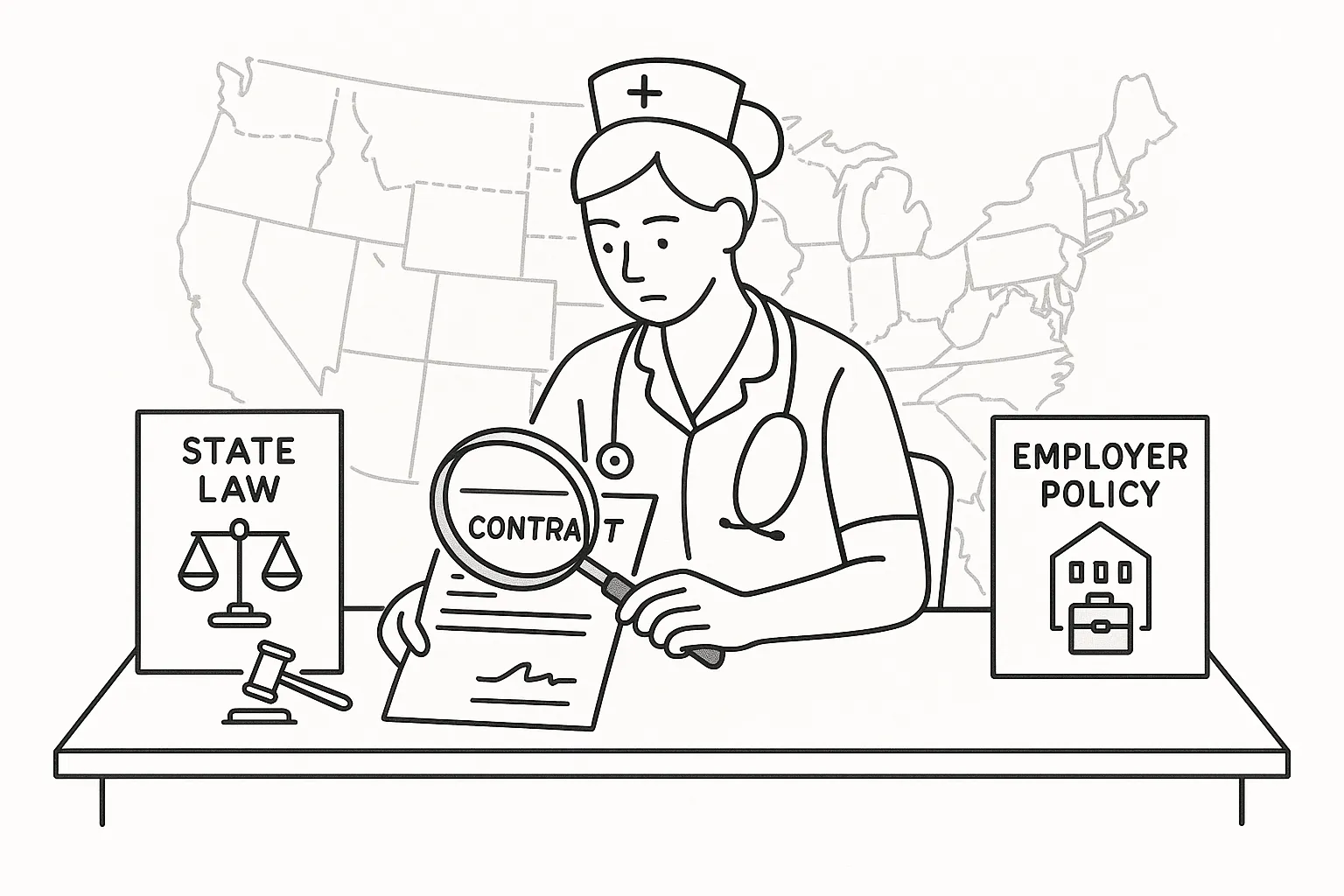
State statutes and regulatory guidance define the boundaries of NP practice, prescriptive authority, collaborative or supervisory requirements, delegation frameworks, and permissible professional titles. These rules vary considerably. Some states permit broader autonomous practice, while others require formal collaboration or physician supervision with specific documentation and oversight procedures. NPs can use Chelle Law’s state contract review directory to find information relevant to the jurisdiction where they will work.
A contract must be read against the controlling regulatory standard. A clause requiring “supervision consistent with state law” may sound reasonable but still fail to explain whether the employer expects on-site physician presence, remote availability, chart review, or a particular response time. Likewise, prescriptive authority language may track the statute while adding internal formularies or controlled-substance restrictions that affect clinical work and income.
The review should ask whether the agreement accurately reflects the state regulatory baseline and whether it adds private requirements that limit practice or increase risk. Because enforceability and permissible employer demands depend on the jurisdiction and facts, the contract should not be evaluated solely through a general policy manual or a multistate template.
Contract Provisions That Affect an NP’s Scope of Practice
Several provisions determine how the NP’s authorized scope will operate in practice. These clauses should identify responsible parties, required procedures, and the consequences of delays or disagreements instead of giving the employer unrestricted discretion.
Supervision, Collaboration, and Prescriptive Authority
Supervision and collaboration provisions may define which tasks require physician involvement, the frequency and format of meetings or chart reviews, and who approves particular procedures. A contract that delegates supervisory authority to a group or individual without addressing availability, substitute coverage, or emergency support can create operational and regulatory risk. Chelle Law’s guidance on reviewing supervision and collaboration terms explains why these mechanics should be assessed with the underlying employment agreement.
For example, a requirement for “physician approval of complex cases” gives the employer broad discretion if the contract never defines a complex case or the approval process. Prescriptive authority clauses should also address applicable state requirements, DEA registration responsibilities, controlled-substance restrictions, and employer formularies. Without clear language, an NP may face internal discipline or a loss of prescribing privileges based on an undefined policy rather than a documented clinical standard.
Credentialing, Privileging, and Hospital Practice
Credentialing timelines, hospital privileges, admitting rights, renewal responsibilities, and related costs can determine whether an NP is able to perform the work described in the agreement. If privileges depend on employer sponsorship or the employer controls the application process, delays may prevent the NP from meeting productivity expectations through no fault of the NP.
The contract should explain who completes and pays for applications, what happens to compensation while credentialing is pending, and whether employment can be terminated if privileges are delayed or denied. It should also address the status of employer-sponsored privileges after separation when continued hospital practice may be important to the NP’s next position.
Clinical Duties, Productivity Metrics, and Telehealth
Job duties and performance standards can convert employer preferences into contractual obligations. RVU targets, collections formulas, visit quotas, quality measures, and repayment provisions may pressure an NP to perform work that conflicts with clinical judgment or falls outside available privileges. A focused NP compensation and productivity review can identify unclear formulas, reconciliation periods, and negative accrual provisions that compound scope-related risks.
Telehealth clauses should identify approved jurisdictions, licensure responsibilities, supervision arrangements, prescribing limitations, and the employer’s role in maintaining multistate compliance. Contracts that do not allocate these responsibilities can expose the NP to licensing and coverage problems. The same concerns apply when the employer changes locations, patient populations, or service lines after the agreement is signed.
Contract Clarifications That Can Reduce Scope-Related Risk
Clear operational language can reduce legal and financial uncertainty. Depending on the position and applicable law, important points to clarify may include:
- A description of the NP’s duties that is consistent with applicable law, licensure, training, credentials, and granted privileges.
- Defined supervision or collaboration mechanics, including the responsible person, availability standards, documentation requirements, substitute coverage, and response expectations.
- Prescriptive authority language that addresses DEA registration, controlled substances, internal formularies, and approval procedures.
- Credentialing and privileging procedures with timelines, responsible parties, cost allocation, and compensation rules during delays.
- Transparent productivity formulas, reconciliation periods, and an explanation of whether negative accruals can carry forward or survive termination.
- Telehealth provisions identifying permitted jurisdictions, licensure responsibilities, prescribing rules, and employer support for multistate compliance.
These clarifications help prevent an employer from later interpreting vague language in a way that limits practice or income. They also create a clearer record of which party is responsible when credentialing, supervision, or compliance problems interfere with the NP’s work.
Liability, Termination, and Post-Employment Restrictions
Scope of practice risk does not end with the description of clinical duties. Compensation, malpractice insurance, indemnification, termination, and restrictive covenants determine who bears the financial consequences when a scope or compliance dispute occurs. Warning signs include vague delegation language, subjective productivity standards, broad indemnity obligations, and immediate termination rights based on undefined policy violations.
- Malpractice coverage: The agreement should identify whether coverage is occurrence-based or claims-made and who is responsible for tail coverage after termination. A malpractice and tail insurance review can clarify whether a coverage gap or significant post-employment obligation exists.
- Indemnification: Broad language may require the NP to reimburse the employer for claims involving institutional policies or employer-directed care, not merely the NP’s own conduct.
- Termination: One-sided provisions may allow immediate termination for vague compliance concerns while triggering repayment obligations, loss of earned bonuses, or disruption of hospital privileges.
- Restrictive covenants: Noncompete and nonsolicitation clauses may limit geographic mobility, patient relationships, and future income. Because enforceability varies by jurisdiction, an NP non-compete review should consider both the governing law and the restriction’s practical effect.
- Repayment and final compensation: The agreement should explain prorated repayment of signing or relocation benefits, bonus payout timing, collections reconciliation, and any offsets against final pay.
These provisions are integral to scope-of-practice analysis because they determine what happens when an NP cannot perform assigned duties, loses access to a facility, disputes an employer policy, or leaves the practice. Reviewing them together provides a more accurate picture of the agreement’s effect on income, licensure, liability, and professional mobility.
Frequently Asked Questions
Can an employer contract impose narrower practice limits than state law?
An employer may adopt policies or contractual requirements that are more restrictive than the maximum authority permitted by state law, provided those requirements are otherwise lawful. The agreement should clearly identify those private restrictions so the NP understands how the actual position differs from the state’s regulatory ceiling.
What should an NP supervision or collaboration clause define?
The clause should identify the responsible physician or other authorized professional, required availability, chart-review or meeting procedures, documentation duties, substitute coverage, and the process for resolving clinical disagreements. The necessary details depend on state law and the position’s operational needs.
Should prescriptive authority be addressed in the employment agreement?
Yes. The agreement should address applicable prescribing authority, DEA registration responsibilities, controlled-substance limitations, employer formularies, and any approval procedures that could affect the NP’s duties or compensation.
Who should be responsible for NP credentialing and privileging?
The contract should specify which party prepares and submits applications, pays associated costs, monitors renewals, and responds to delays. It should also explain how compensation and employment status are handled while required credentials or privileges remain pending.
How can productivity terms create scope of practice concerns?
Visit quotas, RVU targets, collections formulas, or quality metrics may create pressure to perform services beyond available time, training, credentials, or privileges. Clear formulas and safeguards help prevent compensation terms from overriding clinical judgment or regulatory obligations.
What should an NP contract say about telehealth across state lines?
The agreement should identify where the NP may treat patients, who is responsible for obtaining and maintaining required licenses, how supervision and prescribing rules will be satisfied, and what support the employer provides for multistate compliance.
Have an Attorney Review Your NP Contract
Chelle Law reviews scope of practice, supervision, compensation, malpractice, termination, and restrictive covenant provisions so you can understand the agreement before signing.
Contact Chelle Law