
Relocation allowances are a common element in nurse practitioner employment agreements, especially for new graduates and clinicians changing practice settings. Although relocation assistance may appear to be a straightforward one-time benefit, its tax treatment, repayment obligations, and termination triggers can affect an NP’s income and career mobility. Understanding the complete agreement before signing helps determine whether the allowance is a genuine benefit or a contingent financial obligation.
Key Takeaways
- Relocation payments may be treated as taxable compensation, reimbursements, advances, or forgivable loans depending on the agreement and applicable tax rules.
- Repayment provisions should distinguish voluntary resignation, termination for cause, and termination without cause.
- A prorated forgiveness schedule generally creates less financial exposure than an all-or-nothing repayment obligation.
- The contract should define covered expenses, documentation deadlines, payment caps, and any employer offset rights.
- Relocation terms should be reviewed alongside signing bonuses, productivity compensation, restrictive covenants, and termination provisions.
What a Nurse Practitioner Relocation Allowance Covers
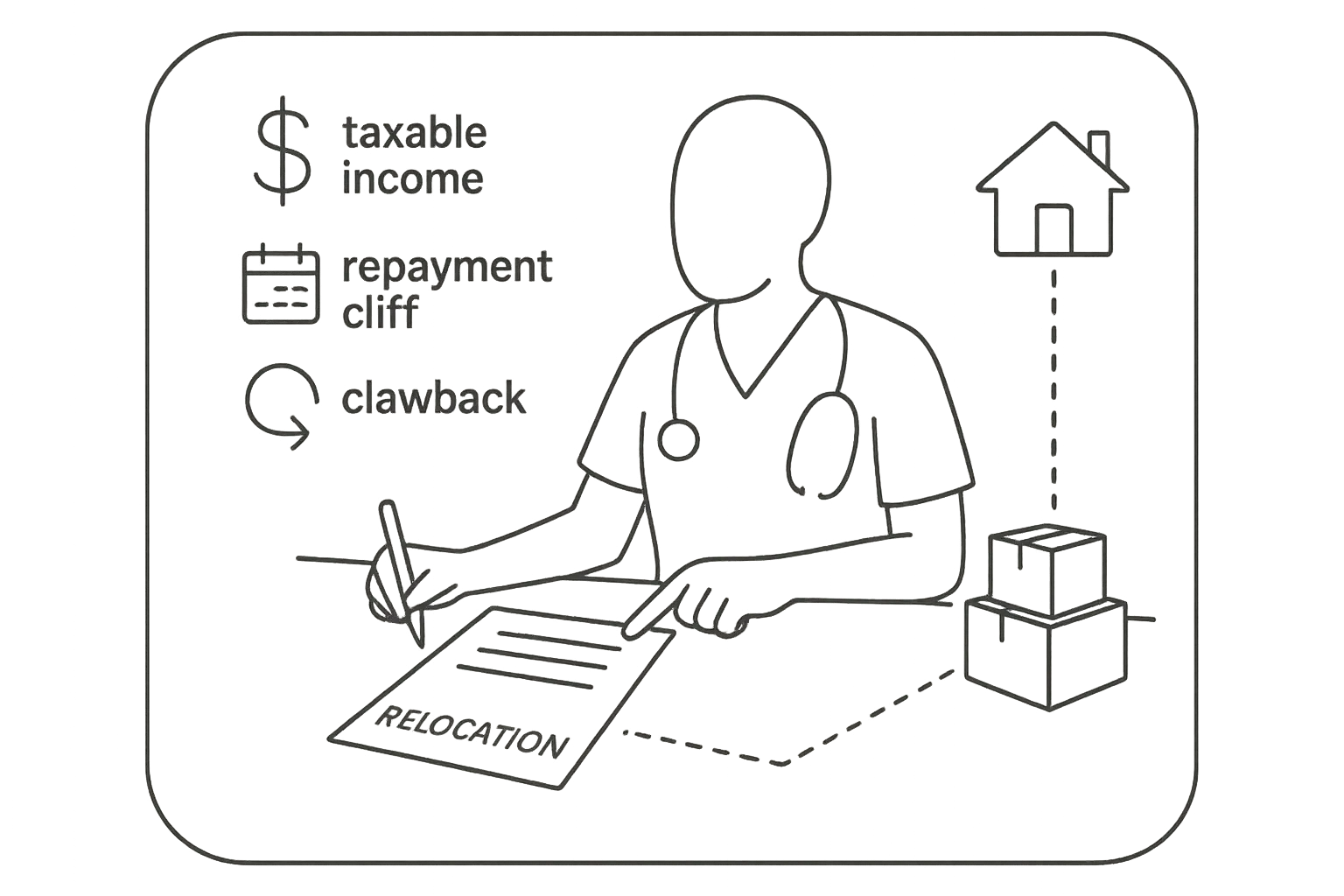
A relocation allowance is an employer-provided financial benefit intended to offset costs an NP incurs when moving for a position. It may cover packing, transportation, temporary housing, storage, travel, or other approved expenses. Assistance can be structured as a lump-sum payment, reimbursement of documented costs, direct vendor payment, or a loan that is forgiven over time.
The structure matters because it affects when the money is paid, what documentation is required, and whether the NP may have to return it. A relocation provision should be evaluated as part of the overall employment package rather than in isolation. A comprehensive nurse practitioner contract review can identify how the benefit interacts with compensation, termination rights, malpractice coverage, and restrictive covenants.
Relocation Package Structures and Contract Terms

Relocation packages allocate administrative responsibility and financial risk in different ways. The agreement should identify the payment structure, eligible expenses, service commitment, and circumstances that create a repayment obligation.
Lump Sums, Reimbursements, and Relocation Loans
- Lump-sum payment: The employer pays a fixed amount, often shortly before or after the start date. This provides flexibility but may create tax and repayment questions if the contract does not explain how the payment is characterized.
- Expense reimbursement: The NP submits receipts for approved moving costs, subject to category restrictions, deadlines, or an overall cap.
- Advance with reconciliation: The employer advances funds or pays vendors and later compares the payment with documented expenses. The agreement should explain how excess funds or unreimbursed costs will be handled.
- Forgivable relocation loan: The employer advances money that is forgiven over a stated service period. The unforgiven balance may become due if employment ends early.
Covered Expenses, Caps, and Documentation
The contract or incorporated relocation policy should identify eligible expenses and any limits. Common categories include movers, packing, transportation, temporary housing, storage, and certain travel costs. Category caps and an overall maximum should be stated clearly, along with receipt requirements and submission deadlines.
Language allowing reimbursement only for expenses the employer unilaterally considers “reasonable” gives the employer significant discretion. Objective standards, written approval procedures, and a defined process for disputed expenses can reduce the risk of denied reimbursement.
Repayment Triggers and Forgiveness Schedules
Repayment language is often the most consequential part of a relocation provision. Some agreements require full repayment if employment ends within a stated period, while others forgive a portion for each month of completed service. The clause should distinguish voluntary resignation, termination for cause, termination without cause, position elimination, disability, and other possible events rather than using an undefined reference to any “termination.”
The agreement should also explain when repayment is due, whether interest applies, and whether the employer may seek an offset against final compensation. These terms should be reviewed together with the contract’s broader termination provisions. A separate signing bonus may contain a similar but different clawback, making it important to compare all repayment schedules and understand the combined exposure.
Tax Treatment and Compensation Interactions
Relocation benefits are often treated as taxable compensation under federal rules, although the correct treatment depends on current law, the payment structure, and the NP’s circumstances. The agreement should state whether the payment will be reported as wages, whether taxes will be withheld, and whether the employer has agreed to a gross-up. An NP should consult a qualified tax professional for advice about the tax consequences of a particular payment or repayment.
Relocation assistance also may interact with base salary, signing bonuses, loan repayment, and productivity incentives. An employer may reserve the right to offset an amount owed against a bonus or other compensation, while a year-end reconciliation could produce a separate adjustment. Reviewing the complete compensation and productivity formula helps reveal whether a relocation obligation could affect later incentive payments.
- Offsets: The agreement may permit the employer to apply a relocation debt against bonuses or other amounts owed to the NP.
- Negative accrual: A compensation reconciliation may carry a deficit into a future period or reduce a later productivity payment. NPs should understand any negative accrual provision before assuming that each obligation is calculated independently.
- Multiple repayment obligations: Relocation assistance, signing bonuses, educational benefits, and loan repayment may each have separate service commitments and triggers.
- Timing conditions: Payment or forgiveness may depend on the start date, credentialing, full-time status, or continued employment through a specified date.
Relocation Allowance Red Flags
Employer-drafted relocation language may create obligations that are broader than an NP expects. The following provisions warrant close review before the agreement is signed:
- An undefined repayment trigger based on any termination of employment.
- Full repayment instead of prorated forgiveness after substantial service has been completed.
- Immediate acceleration of the entire debt with no reasonable payment period.
- Unclear characterization of the payment as a loan, bonus, advance, or reimbursement.
- Unilateral employer authority to deny expenses or change an incorporated relocation policy.
- Broad offset language covering wages, accrued leave, bonuses, or other compensation.
- Cross-default language connecting relocation repayment to unrelated contract provisions.
- No explanation of tax withholding or how a later repayment will be documented.
Relocation obligations can also compound other limits on professional mobility. For example, an NP who leaves a position may face both a repayment demand and a geographic restriction. A separate review of the non-compete language can clarify whether the agreement creates overlapping financial and practice restrictions.
Contract Language That Can Reduce Relocation Risk
Clear drafting can make the financial consequences of relocation assistance easier to evaluate. Proposed revisions should be tailored to the complete agreement and applicable law, but commonly reviewed terms include:
- Defined repayment events: Distinguish resignation, termination for cause, termination without cause, position elimination, and other employer-initiated events.
- Prorated forgiveness: State the amount forgiven during each month or other service period and how the remaining balance is calculated.
- Objective expense standards: Identify covered categories, caps, required proof, approval procedures, and submission deadlines.
- Tax language: Explain intended reporting, withholding, and any agreed gross-up without substituting contractual language for individualized tax advice.
- Limited offset rights: Clarify whether deductions or offsets are permitted and require compliance with applicable law.
- Reasonable repayment timing: Avoid an unexpected immediate demand by specifying when repayment is due and whether an installment arrangement is available.
Relocation terms should also be compared with any signing bonus repayment provisions. Different definitions, forgiveness periods, or exceptions can create confusion and increase the amount due after an early departure.
What to Bring to a Relocation Contract Review
Consulting an attorney before signing is particularly important when the relocation payment is substantial, structured as a loan, or tied to a lengthy service commitment. The review should include the full agreement because repayment rights and offsets may appear outside the relocation section.
- The complete employment or independent contractor agreement, including exhibits and addenda.
- The offer letter and any separate relocation policy or reimbursement form.
- Information about base salary, productivity compensation, bonuses, and loan repayment benefits.
- Estimated moving costs and any written statements about eligible expenses or tax treatment.
- Questions about likely termination scenarios, credentialing delays, schedule changes, or reductions in hours.
An attorney can identify employer-favorable language, calculate potential repayment exposure, and propose revisions that align the relocation provision with the rest of the contract. At Chelle Law, the review focuses on what the written terms mean for the NP’s income, exit options, and professional flexibility.
Frequently Asked Questions
Are nurse practitioner relocation allowances taxable?
Relocation payments are often treated as taxable compensation, but the result depends on current tax law, the payment structure, and the NP’s circumstances. The agreement should explain intended reporting and withholding, and a qualified tax professional should evaluate the specific tax consequences.
Must an NP repay relocation assistance after termination without cause?
That depends on the contract. Broad language referring to any termination may require repayment, while a better-defined provision may exclude termination without cause, position elimination, or other employer-initiated events.
Is a lump-sum allowance better than reimbursement?
Neither structure is automatically better. A lump sum provides flexibility and predictability, while reimbursement may more clearly connect payment to approved expenses. The tax language, expense limits, documentation requirements, and repayment terms determine the practical value of either option.
How does prorated forgiveness work in a relocation clause?
Prorated forgiveness reduces the repayable balance as the NP completes the required service period. The contract should provide a clear formula, identify when each portion is forgiven, and explain how the remaining amount is calculated if employment ends early.
Can an employer deduct relocation repayment from an NP’s final paycheck?
An employer’s ability to deduct or offset repayment depends on the agreement and applicable wage laws. The contract should identify any claimed offset right, but contractual language does not necessarily make every deduction lawful.
What documents should an NP provide for relocation allowance review?
The review should include the complete employment agreement, offer letter, relocation policy, compensation exhibits, bonus terms, and any written communications about eligible expenses or tax treatment. Reviewing all related documents helps identify inconsistent triggers and overlapping repayment obligations.
Review Your Relocation Terms Before You Sign
Chelle Law reviews nurse practitioner agreements for repayment triggers, compensation offsets, tax language, and other terms that may affect your income and career mobility.
Contact Chelle LawExplore Nurse Practitioner Contract Guidance
Review related legal services, practical contract resources, and state-specific information from Chelle Law.