
When a nurse practitioner accepts a position in North Dakota—whether practicing in Fargo, Bismarck, Grand Forks, or another community—the employment or independent contractor agreement governs compensation, duties, malpractice coverage, termination rights, and post-employment restrictions. These agreements operate within North Dakota law and the professional framework administered by the North Dakota Board of Nursing, including statutory authority under North Dakota Century Code Chapter 43-12.1 for advanced practice registered nurses.
Subtle drafting differences can materially affect productivity pay, repayment obligations, restrictive covenants, and the ability to leave a position. North Dakota also restricts many contractual restraints of trade under N.D.C.C. § 9-08-06, subject to statutory language and the facts of the agreement. A contract review should therefore evaluate both the financial mechanics and how employer-drafted terms interact with state law and professional obligations.
Chelle Law provides structured, attorney-led review of North Dakota NP agreements. We examine the contract line by line to identify provisions affecting earnings stability, regulatory compliance, liability exposure, and career mobility. Nurses considering an offer can also explore our broader nurse practitioner contract review services.
Key Takeaways for North Dakota Nurse Practitioners
- Review the entire agreement and all referenced exhibits before signing, including compensation schedules, policies, and repayment addenda.
- Confirm how collections, productivity, relative value units, bonuses, deductions, and reconciliation periods are defined and calculated.
- Determine whether malpractice coverage is claims-made or occurrence-based and who must pay for tail coverage when employment ends.
- Make sure clinical duties, prescribing responsibilities, scheduling expectations, and employer protocols align with North Dakota practice requirements.
- Identify the triggers, duration, repayment consequences, and post-employment restrictions associated with resignation or termination.
North Dakota Regulatory and Practice Considerations

North Dakota’s regulatory environment shapes the duties and professional obligations described in an NP contract. The agreement should be reviewed alongside the requirements administered by the North Dakota Board of Nursing, including applicable rules concerning licensure, prescribing, scope of practice, and other professional responsibilities. Employer policies may add operational requirements, but the contract should not leave the NP uncertain about who is responsible for maintaining required credentials or complying with clinical protocols.
Broad language concerning supervision, collaboration, physician signatures, or protocol approval can create practical problems when it does not accurately reflect the position or applicable requirements. It is also important to address what happens if a designated physician, facility relationship, or clinical arrangement changes. Our review of supervision and collaboration terms focuses on whether those provisions clearly allocate responsibilities and account for changes that could affect the NP’s work.
Practice setting also matters. Health systems, private practices, rural facilities, and telehealth platforms may use different compensation methods, schedules, documentation standards, and coverage expectations. The agreement should describe the actual position rather than rely on broad language allowing the employer to change material duties without clear limits.
Compensation, Duties, and Scheduling Terms
Compensation Formulas and Payment Rights
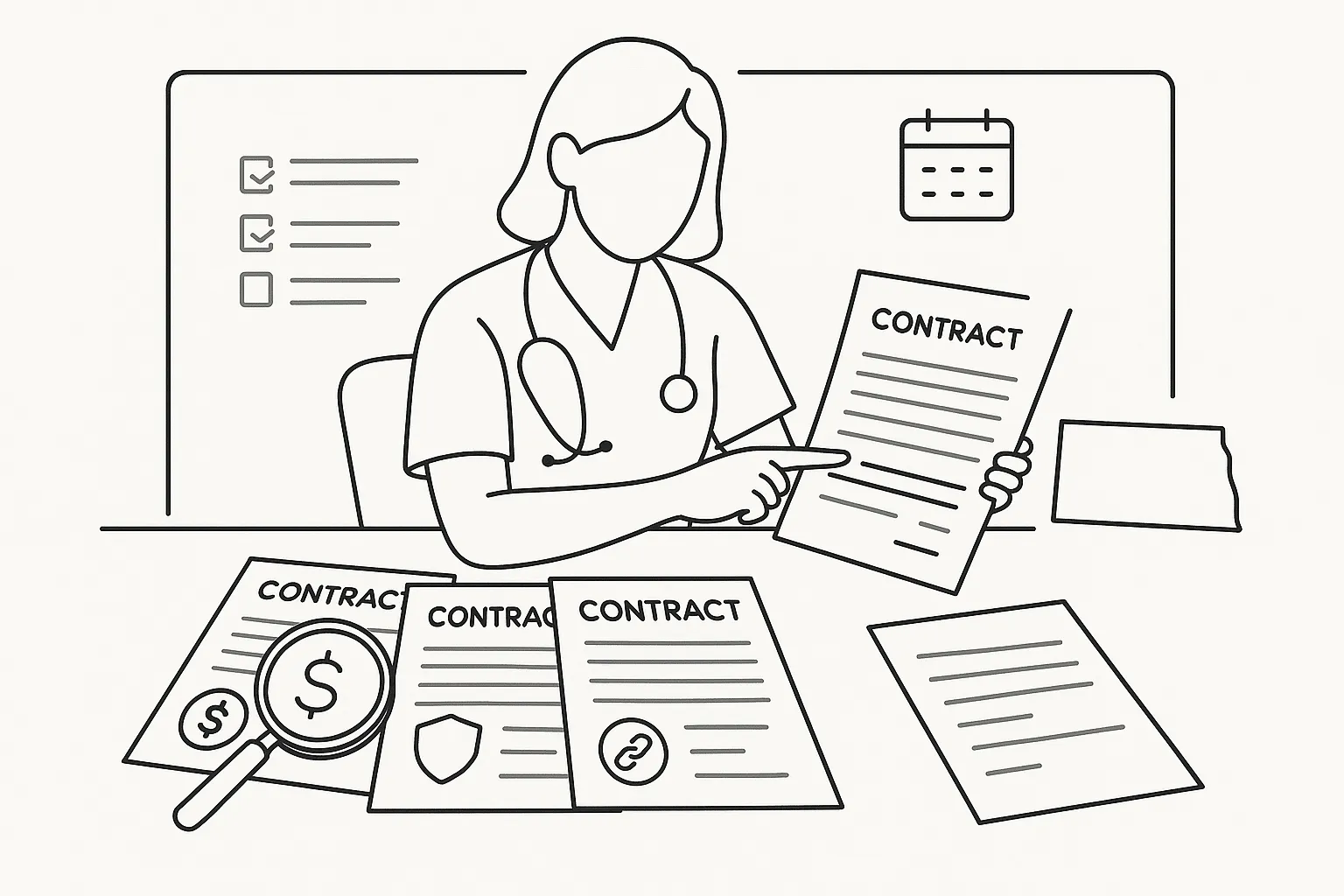
NP compensation may consist of a fixed salary, collections-based pay, RVU production, quality incentives, or a combination of these methods. The contract should define collections, billable encounters, RVUs, measurement periods, thresholds, and the timing of bonus calculations. It should also explain whether payer adjustments, billing denials, refunds, or chargebacks can reduce compensation.
Reconciliation and audit provisions deserve particular attention. Employer-favorable language may permit unilateral recalculation, negative accrual, or recovery of previously paid compensation without giving the NP access to supporting records. A focused NP compensation and productivity review can identify unclear formulas, data-access limitations, and payment terms that shift excessive financial risk to the practitioner.
Clinical Duties, Work Locations, and Call Coverage
The job description should state the expected clinical duties while placing reasonable limits on administrative work, call coverage, and assignments outside the anticipated role. Broad provisions allowing duties to be changed at the employer’s discretion can lead to duty creep or reduce the time available for productivity-based work.
Confirm clinic hours, call frequency, weekend obligations, cross-site assignments, floating requirements, and any restrictions on moonlighting. The agreement should also explain PTO accrual and whether leave, onboarding, credentialing delays, or administrative time affects productivity calculations. These details can materially influence annual earnings and work-life balance even when the stated salary appears competitive.
Malpractice Coverage, Termination, and Repayment Obligations
Malpractice Insurance and Tail Coverage
A claims-made policy generally covers claims reported while the policy remains active and may require extended reporting, commonly called tail coverage, after the policy ends. An occurrence policy generally covers incidents that took place during the policy period regardless of when the claim is reported. The contract should identify the policy type, coverage responsibility, applicable limits, and whether the NP must purchase tail coverage after departure.
Tail responsibility can create substantial post-employment exposure, particularly when the obligation applies regardless of why the relationship ended. Indemnification, cooperation, incident-reporting, and insurance-notification provisions should also be reviewed for one-sided liability. Chelle Law’s malpractice and tail insurance review evaluates how these obligations are allocated throughout the agreement.
Termination Rights and Financial Clawbacks
Termination language should distinguish between termination for cause, termination without cause, nonrenewal, and resignation. Review the definition of cause, any opportunity to cure an alleged breach, required notice periods, and whether the employer may immediately remove the NP from the schedule while withholding compensation.
Signing bonuses, relocation assistance, educational benefits, or salary advances may be subject to repayment if employment ends before a stated date. The contract should specify the trigger, calculation method, proration, and whether repayment applies after an employer-initiated termination. It should also explain how final productivity pay, accrued benefits, and other earned compensation will be reconciled. A termination provision review can clarify these financial consequences before the agreement is signed or notice is given.
Non-Compete and Post-Employment Restrictions
North Dakota’s statutory treatment of restraints of trade makes careful review of restrictive language particularly important. A contract may contain a provision labeled as a non-compete, but it may also restrict competition through patient nonsolicitation, employee nonsolicitation, confidentiality, referral-source limitations, or clauses controlling the use of business information. The wording and facts matter, so the agreement should be evaluated rather than assuming that every restriction will have the same effect.
Review the services covered, geographic language, duration, triggering events, and any contractual remedies. A restriction may create practical career risk even when its enforceability is disputed, especially if it affects future employment, patient communications, or the timing of a job transition. Our nurse practitioner non-compete review examines the full set of post-employment limitations rather than focusing only on the clause’s title.
Contract Red Flags and Documents to Review
Common warning signs include undefined compensation terms, unilateral amendment rights, negative accrual, broad indemnification, unclear scheduling duties, open-ended repayment clauses, and restrictions triggered by any type of separation. Language that gives the employer extensive flexibility while placing all financial or compliance risk on the NP should be evaluated in the context of the complete agreement.
Before requesting a line-by-line contract review, gather the complete agreement and every incorporated document. Relevant materials may include:
- Compensation schedules, bonus plans, and productivity formulas.
- The job description, call schedule, and work-location requirements.
- Malpractice policy information identifying claims-made or occurrence coverage.
- Signing bonus, relocation, educational benefit, or repayment addenda.
- Employer policies, clinical protocols, and credentialing requirements incorporated into the contract.
- Benefits information covering PTO, continuing education, licensure, and prescribing-related expenses.
Verify the identity of the contracting employer, all effective dates, renewal provisions, and notice addresses. Small inconsistencies between the main agreement and an exhibit can change payment rights or create uncertainty about which terms control. Attorney review is most useful before signing, while there is still an opportunity to understand and address the identified risks.
Ongoing Contract and Recordkeeping Practices
After signing, retain the executed agreement, exhibits, amendments, productivity reports, payer or collections data made available by the employer, credentialing correspondence, and written communications concerning duties or compensation. If the employer performs periodic reconciliations, preserve the records needed to compare reported work with the resulting payment calculation.
Confirm malpractice renewals and retain certificates of insurance. Follow applicable incident-reporting requirements and keep written records of changes involving work locations, clinical protocols, or professional responsibilities. If compensation, scheduling, duties, or another material term changes, request a written amendment rather than relying solely on an informal assurance.
Have a North Dakota NP Contract Reviewed Before You Sign
Chelle Law can identify compensation risks, malpractice obligations, termination consequences, and post-employment restrictions in your proposed agreement.
Contact Chelle LawExplore Nurse Practitioner Contract Guidance
Review available legal services, practical contract resources, and state-specific guidance for nurse practitioners.