
Malpractice insurance provisions in a nurse practitioner contract can create significant financial and professional exposure during employment and after the relationship ends. Policy type, coverage limits, retroactive dates, exclusions, tail insurance responsibility, indemnification, and post-termination obligations determine whether an NP remains protected when a claim arises from prior clinical work. These provisions should be evaluated as contractual risk allocations rather than treated as a routine benefit description.
The details matter because employer policies do not always protect every service an NP may perform. Coverage may be limited by location, scope of employment, telehealth activity, moonlighting, contractor status, or the date on which an alleged incident occurred. A claims-made policy can also leave a significant gap after employment ends unless tail or prior-acts coverage is secured, while indemnification and repayment clauses may shift additional costs to the practitioner.
Chelle Law provides attorney-led nurse practitioner malpractice and tail insurance review services nationwide. We examine the agreement and available insurance documents, explain how coverage and tail obligations are allocated, identify ambiguous or one-sided provisions, and recommend terms that may require clarification or negotiation before signing. This service can be part of a broader NP contract review or focus specifically on malpractice protection and post-employment coverage.
Key Malpractice and Tail Insurance Issues
- Verify whether the employer policy is claims-made or occurrence and obtain written confirmation of the insurer, policy number, retroactive date, limits, and any prior-acts coverage.
- Determine who must purchase tail coverage and whether that responsibility changes after resignation, termination, non-renewal, disability, retirement, or employer insolvency.
- Identify exclusions affecting moonlighting, telehealth, outside-site work, provisional privileges, or services performed beyond narrowly defined employment duties.
- Review indemnification, repayment, defense-control, and claims-reporting clauses for language that shifts disproportionate malpractice risk to the NP.
- Before leaving, obtain proof of coverage, confirm any promised tail endorsement, preserve relevant records, and address potential gaps before the employer policy ends.
Understanding Nurse Practitioner Malpractice Coverage
Claims-Made and Occurrence Policies
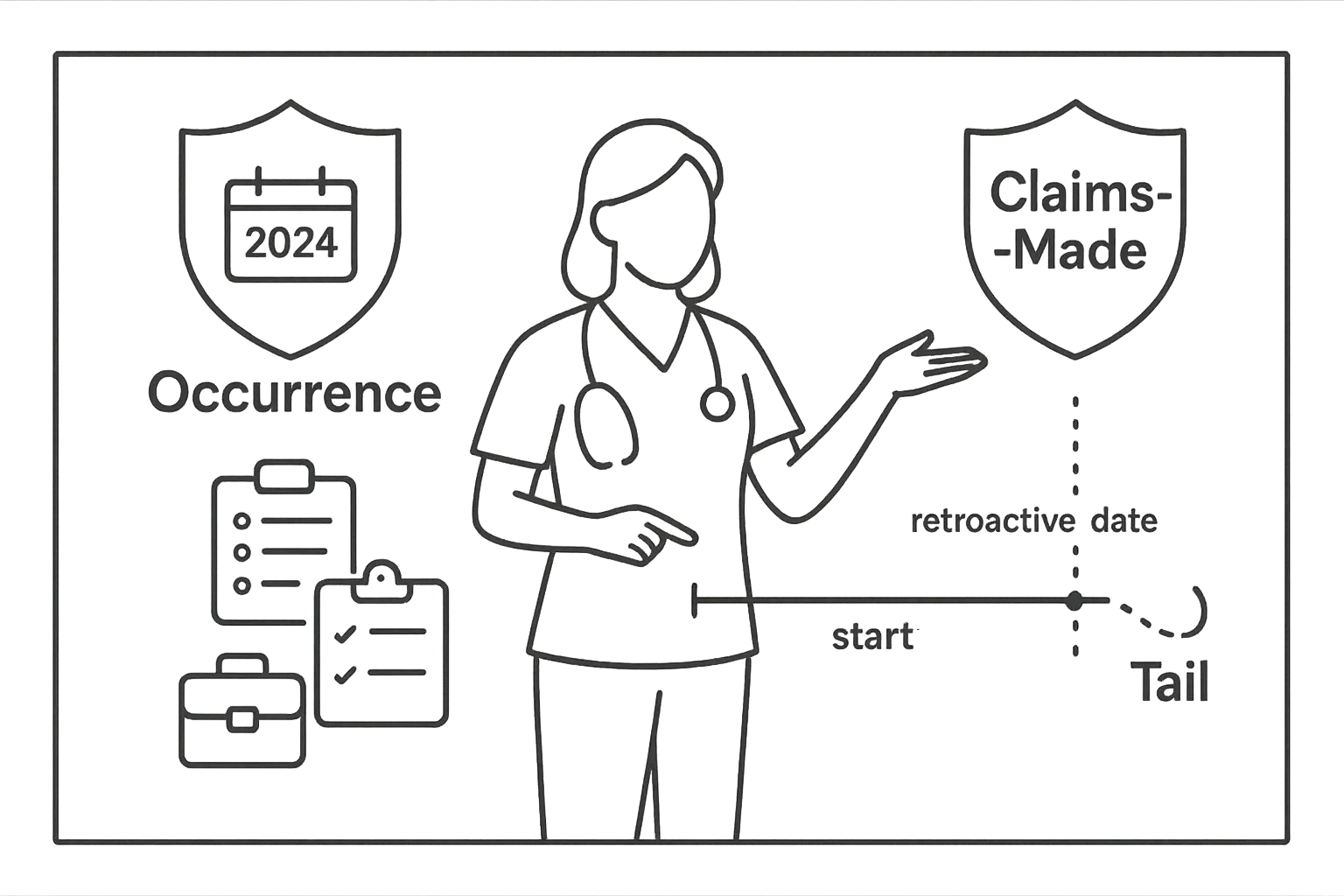
An occurrence policy generally covers an incident that occurs during the policy period, even if the claim is filed after that policy ends. A claims-made policy generally responds when the claim is made while the policy or an extended reporting period is active, provided the alleged act occurred after the applicable retroactive date. Because these timing rules differ, the policy form directly affects an NP’s obligations when changing jobs.
For an NP working under claims-made coverage, ending employment without tail or qualifying prior-acts coverage can leave prior clinical services uninsured. Occurrence coverage generally avoids the need for traditional tail coverage for incidents occurring while the policy was active, but the practitioner must still verify the actual policy, limits, exclusions, and covered services. Our guide to claims-made and occurrence coverage explains how these policy structures affect contract review.
Policy Limits, Exclusions, and Prior-Acts Coverage
Coverage limits should be reviewed on both a per-claim and aggregate basis, together with how defense costs are treated. The contract or policy should identify whether the employer’s insurance covers the NP directly and whether coverage extends to every location, duty, and clinical service required by the agreement. A general promise to provide malpractice insurance may not explain the practical extent of that protection.
Prior-acts, or nose, coverage can protect services performed before the effective date of a new claims-made policy when the new policy recognizes an appropriate retroactive date. It may bridge a transition between employers, but it should not be assumed to exist without written confirmation. NPs should also examine exclusions involving moonlighting, outside facilities, administrative services, and telehealth contract duties, particularly when patients may be located in different jurisdictions.
Tail Insurance and Post-Employment Risk
Tail Responsibility and Triggering Events
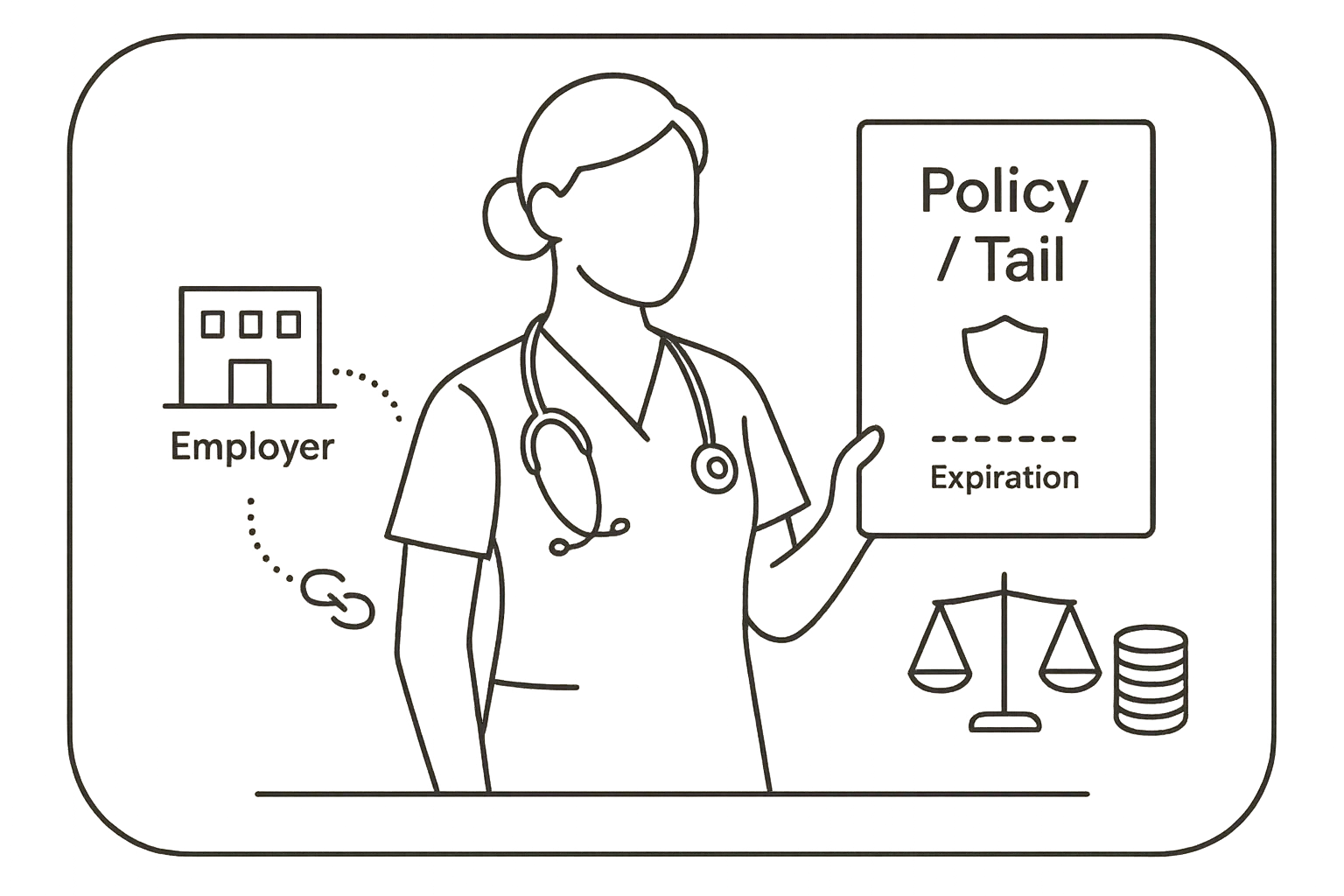
Tail insurance is an extended reporting endorsement that permits qualifying claims to be reported after a claims-made policy ends for incidents occurring during the covered period. The contract should state whether the employer or NP must obtain the endorsement, who pays for it, when it must be purchased, and how long the reporting protection lasts. Tail is generally not required for incidents properly covered under an occurrence policy.
Responsibility may depend on why the relationship ends. Some agreements provide employer-paid tail only after termination without cause, leaving the NP responsible after resignation, for-cause termination, or non-renewal. Broad and unambiguous language is preferable because narrow triggering events can create an unexpected gap precisely when the practitioner is leaving the organization. Tail obligations should therefore be reviewed together with the agreement’s termination and non-renewal provisions.
Tail Costs, Coverage Gaps, and Departure Planning
Tail premiums vary based on the insurer, specialty, policy limits, coverage period, claims history, and pricing methodology. Even when an employer pays the active-policy premium, the contract may assign the entire post-employment cost to the NP. The practitioner should obtain an estimate when possible and evaluate that potential obligation alongside compensation, signing-bonus repayment, and other exit costs.
Before departing, an NP should request a certificate of insurance showing coverage dates and limits, confirm whether any promised tail endorsement has been issued, and retain relevant policy and claims correspondence. If employer-paid tail is unavailable, individual tail or qualifying prior-acts coverage should be addressed before the existing policy terminates. The guide to tail insurance for nurse practitioners provides additional context for evaluating these transition risks.
Employer and Individual Malpractice Policies
Employer Coverage, Indemnification, and Claims Handling
Employer-sponsored insurance can provide group rates, coordinated defense, and administrative convenience. However, the employer may control claims reporting, counsel selection, settlement decisions, and access to policy documents. Those interests may not always align with the NP’s concerns about professional reputation, credentialing, licensing exposure, or future employment.
The agreement should clarify whether the NP is a named insured or otherwise directly covered, whether defense expenses reduce available limits, and whether the practitioner will be consulted before settlement. Indemnification clauses also require careful review because an obligation to reimburse the employer for institutional policies, systemic failures, or broadly defined misconduct may extend beyond the insurance protection described elsewhere in the contract.
Individual Coverage for Outside Work and Contractor Roles
An individual policy may be appropriate when employer coverage excludes moonlighting, telehealth, services at unaffiliated locations, or other outside practice. Depending on its terms, a separate policy may also provide portability, direct access to the insurer, and greater control over defense arrangements. The individual policy must still be coordinated with employer coverage to avoid conflicting reporting obligations or misunderstood gaps.
Coverage responsibility can be especially important for 1099 clinicians. Some organizations insure contractors, while others require them to obtain and maintain their own policies, provide certificates, and purchase tail coverage. An independent contractor agreement review can determine whether insurance requirements, indemnification duties, and post-termination obligations are consistent across the agreement.
How Chelle Law Reviews Malpractice and Tail Terms
We review the agreement’s insurance provisions together with related termination, indemnification, repayment, outside-activity, and claims-cooperation clauses. When declarations pages or endorsements are available, we compare those documents with the contractual promises to identify inconsistent policy types, retroactive dates, limits, exclusions, or tail obligations. This broader review matters because malpractice responsibility is often distributed across several sections rather than stated in one clause.
Clear language should state that coverage will be maintained for professional services performed under the agreement and should identify who purchases any required extended reporting endorsement. Language giving the employer sole discretion to provide insurance, or assigning tail to the NP except under narrowly defined circumstances, warrants closer scrutiny. We also evaluate whether repayment or indemnification language could make the NP responsible for premiums, defense expenses, settlements, or institutional liabilities that were not apparent from the malpractice section alone.
What Nurse Practitioners Should Confirm Before Signing
- Confirm whether the policy is claims-made or occurrence and obtain written proof of the policy form.
- Verify the per-claim and aggregate limits, insurer, policy number, effective dates, retroactive date, and treatment of defense costs.
- Request written confirmation of prior-acts coverage and any exclusions affecting telehealth, moonlighting, outside facilities, or administrative duties.
- Identify who must purchase tail coverage, the events that trigger that obligation, the required reporting period, and the deadline for obtaining the endorsement.
- Review indemnification, claims-cooperation, settlement-control, and insurance repayment clauses for obligations that extend beyond available coverage.
- Before departure, obtain a certificate of insurance, confirm any promised tail coverage, and address replacement or prior-acts protection before the current policy ends.
A policy summary may not disclose every limitation or endorsement. When available, the declarations page and relevant endorsements provide important details that should be compared with the agreement before the NP relies on the employer’s description of coverage.
Frequently Asked Questions
What malpractice insurance provisions should a nurse practitioner review in a contract?
A nurse practitioner should review the policy type, coverage limits, effective dates, retroactive date, exclusions, tail responsibility, outside-practice coverage, indemnification provisions, reporting obligations, and what happens to coverage when the employment or independent contractor relationship ends.
What is the difference between claims-made and occurrence malpractice insurance?
Claims-made coverage generally protects qualifying claims made while the policy or an extended reporting period is active, subject to the policy’s terms and retroactive date. Occurrence coverage generally applies based on when the alleged incident occurred, even if the claim is filed after the policy ends. Claims-made policies may therefore require tail coverage when the relationship terminates.
Who pays for nurse practitioner tail insurance?
The contract determines who is responsible. Some employers pay the full cost, some require the nurse practitioner to pay, and others allocate responsibility based on how the relationship ends. Because tail coverage can create a substantial exit expense, the agreement should clearly state who must obtain and pay for it.
Does an occurrence malpractice policy require tail insurance?
Generally, occurrence coverage does not require traditional tail insurance for incidents that occurred while the occurrence policy was in effect. The NP should still verify the actual policy type, coverage period, limits, exclusions, and whether any earlier clinical services require separate prior-acts protection.
Should an independent contractor nurse practitioner carry separate malpractice insurance?
Possibly. Some organizations provide malpractice insurance for 1099 nurse practitioners, while others require contractors to obtain their own coverage. The agreement should identify who provides the policy, required limits, whether claims-made or occurrence coverage is required, and who is responsible for tail or prior-acts coverage.
Does Chelle Law review nurse practitioner malpractice and tail insurance provisions nationwide?
Yes. Chelle Law provides nurse practitioner malpractice and tail insurance contract review services nationwide. We review how coverage, tail responsibility, indemnification, termination provisions, and related obligations are allocated and explain the potential financial and professional consequences.
Understand Your Malpractice and Tail Obligations
Claims-made coverage, tail insurance, exclusions, indemnification, and post-termination obligations can create substantial financial exposure. Chelle Law reviews these provisions so you can understand your protection and potential costs before signing.
Request a Malpractice and Tail Insurance ReviewExplore More Nurse Practitioner Contract Guidance
Review related services, practical contract resources, and state-specific guidance for nurse practitioners.