
Tail insurance is a frequently overlooked element of nurse practitioner employment and independent contractor agreements. The distinction between claims-made and occurrence malpractice policies—and responsibility for tail or extended reporting coverage—can create significant financial exposure after a position ends. This guide explains when tail coverage is necessary, how contracts allocate its cost, and which provisions nurse practitioners should evaluate before signing or terminating an agreement.
Key Takeaways
- A claims-made policy generally creates a post-employment coverage gap unless tail coverage, an extended reporting period, or qualifying prior-acts coverage applies.
- Confirm the policy type, retroactive date, coverage limits, and responsibility for tail costs before signing or leaving a position.
- Repayment clauses, survival provisions, and termination-based conditions can convert employer-paid coverage into a personal financial obligation.
- Employer-paid tail, reasonable cost sharing, or clearly defined prior-acts coverage may reduce an NP’s post-employment exposure.
- Written proof of coverage and a careful contract review help protect income, professional mobility, and access to a defense if a claim is later reported.
How Tail Insurance Works for Nurse Practitioners
Claims-Made Versus Occurrence Malpractice Policies
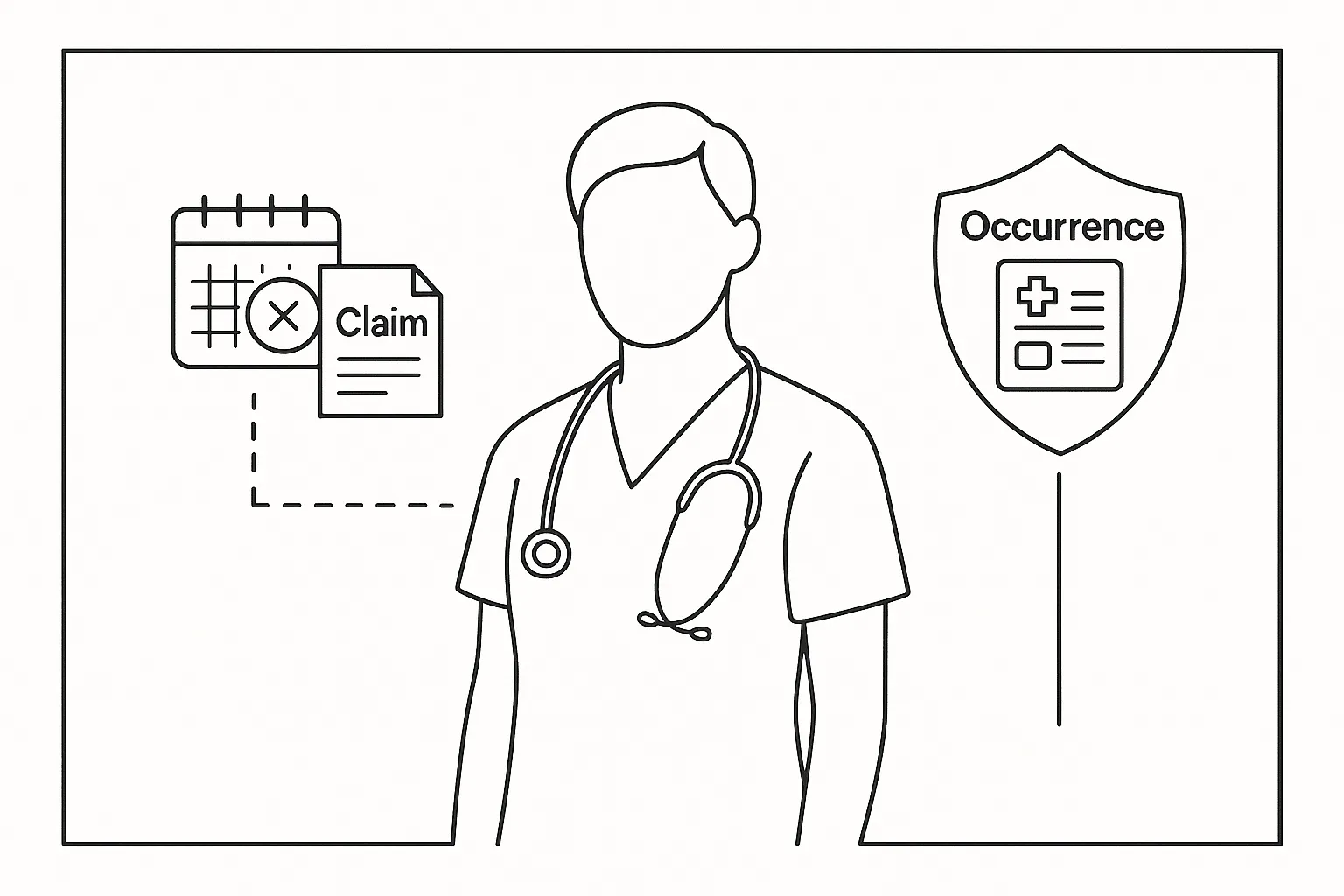
A claims-made policy generally covers a claim only when the alleged act occurred after the policy’s retroactive date and the claim is reported while the policy is active. An occurrence policy instead covers an eligible claim arising from an act that occurred during the policy period, even when the claim is reported after the policy ends. The distinction is central to understanding claims-made and occurrence coverage.
When claims-made coverage ends, tail insurance or an extended reporting period allows later-reported claims involving care provided during the covered period to be reported under the former policy. Without that protection, an NP may face personal exposure to defense costs and potential liability, subject to the applicable policy and contract terms.
Claims Reported After Employment Ends
A patient may assert a claim months or years after the relevant visit, diagnosis, or treatment. For example, an NP who moves to a new role may still face a later claim concerning care provided for a former employer. If the former coverage was claims-made and no tail or qualifying prior-acts protection applies, the prior policy may not respond to the claim.
Exposure can also arise when an NP practiced within a group or under an employer’s coverage. Although the organization may retain responsibility for certain claims, the employment agreement can shift tail costs, reimbursement duties, or indemnification obligations to the NP. These provisions should be evaluated together rather than treated as separate boilerplate terms.
When an NP May Need Tail Coverage
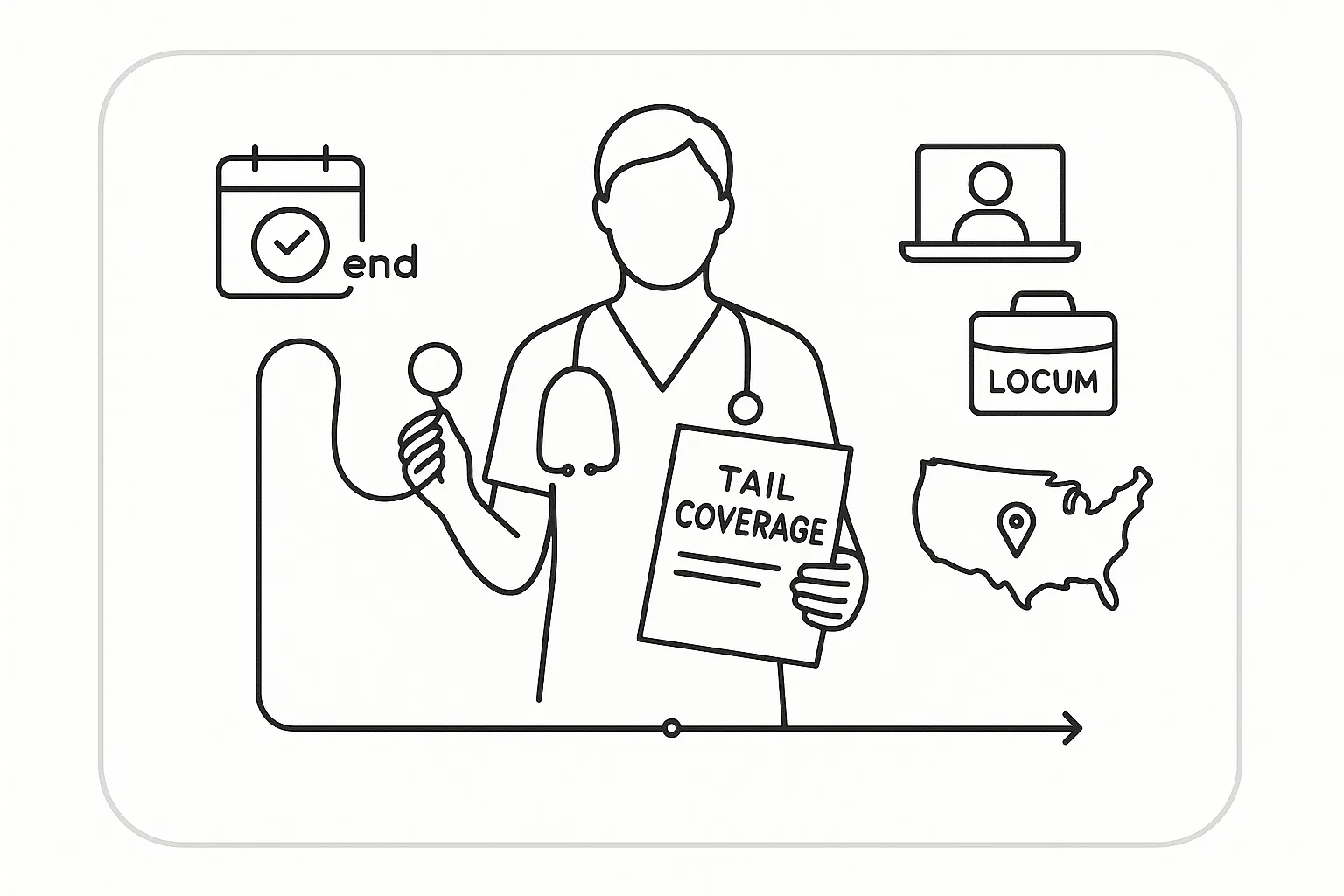
Tail coverage becomes relevant when claims-made coverage ends because of resignation, nonrenewal, termination, retirement, or a change of insurer. Retirement does not eliminate exposure to later-reported claims. An employer may agree to purchase tail following an involuntary termination but require the NP to pay after a voluntary departure, making the malpractice provision an important part of reviewing termination obligations.
Independent contractor, telehealth, and locum tenens arrangements require particular attention. Contractors are often required to maintain their own coverage, while staffing agencies may provide coverage only during an assignment. An NP considering a contractor role should review the insurance language alongside the agreement’s indemnification, reporting, and post-termination provisions; a focused independent contractor agreement review can identify obligations that survive the engagement.
Telehealth and multistate practice may introduce additional policy questions, including whether each practice location and service is covered. The NP should verify those details directly with the insurer or broker and retain the applicable declarations, endorsements, and retroactive-date documentation.
Who Pays for Tail Insurance Under an NP Contract?
Employer-Paid, NP-Paid, and Cost-Sharing Arrangements
Contracts generally allocate tail costs to the employer, the NP, or both parties through a cost-sharing arrangement. The allocation may depend on why employment ends. For example, an employer may pay after termination without cause but require the NP to pay after resignation or termination for cause. Contractor agreements are more likely to place the obligation on the individual clinician.
The agreement should identify who must obtain the coverage, when it must be purchased, what limits apply, and what documentation must be provided. A promise that the employer will “provide malpractice insurance” does not necessarily establish responsibility for post-employment tail coverage. A comprehensive malpractice and tail insurance review examines these provisions together with the underlying policy information.
Repayment, Survival, and Conditional Coverage Clauses
Repayment provisions may require the NP to reimburse an employer for tail costs after an early departure or specified contract breach. Survival language can keep malpractice, indemnification, and reimbursement duties in effect after the agreement ends. Other clauses condition employer-paid tail on signing a release or complying with restrictive covenants.
These conditions can turn a stated benefit into a substantial contingent liability. The NP should also determine whether a non-compete or non-solicitation provision affects tail responsibility. When coverage is tied to post-employment restrictions, both the insurance clause and the non-compete terms should be reviewed before the agreement is accepted.
Tail Coverage Cost, Duration, and Purchase Options
The price of tail coverage varies based on specialty risk, claims history, policy limits, location, the insurer, and the length of the reporting period. Because pricing is policy-specific, an NP should request a written estimate rather than rely solely on a general rule of thumb. Group purchasing arrangements and employer-negotiated policies may also affect the cost.
Extended Reporting Periods and Full Tail Coverage
An extended reporting period may allow claims to be reported for a defined period after the policy ends. A longer or unlimited tail may permit reporting for a broader period, subject to the policy’s exact terms. A limited ERP may cost less but can leave residual risk after it expires, while broader tail protection may involve a higher upfront expense.
Prior-acts coverage from a new insurer may sometimes address earlier services by preserving the applicable retroactive date, but it should not be assumed to replace tail coverage. The new insurer must confirm in writing which prior acts are covered, and the NP should check for exclusions, gaps, or changes in policy limits before relying on that option.
Negotiating Tail Terms and Preparing for a Transition
Negotiations should focus on clearly assigning responsibility for purchasing and paying for coverage. An NP may request unconditional employer-paid tail, employer payment after specified termination events, prorated cost sharing, or a defined cap on personal responsibility. Any negotiated commitment should appear in the signed agreement rather than an informal email or verbal assurance.
- Confirm whether the policy is claims-made or occurrence-based and obtain the declarations page.
- Verify the retroactive date, limits, covered services, and named insureds.
- Identify who must purchase tail coverage and which termination events change that responsibility.
- Review repayment, indemnification, survival, release, and restrictive covenant provisions.
- At separation, obtain written confirmation that tail, an ERP, or qualifying prior-acts coverage is in effect.
- Retain policy documents, endorsements, payment records, and coverage communications.
These steps are also important during a broader contract transition. The malpractice section should be read together with the notice period, final compensation, repayment obligations, and post-employment restrictions. The resource on terminating a nurse practitioner contract explains additional issues that may arise when an NP leaves a position.
Alternatives and Ongoing Risk Management
Occurrence coverage is one way to avoid the reporting gap associated with an expiring claims-made policy. Prior-acts coverage may provide another option when changing insurers, while independently purchased tail coverage can address situations in which an employer will not pay. The appropriate solution depends on the policy language, available coverage, future practice plans, and the insurer’s written confirmation.
Insurance is only one component of malpractice risk management. NPs should maintain complete clinical documentation, preserve incident and patient-communication records, follow applicable reporting requirements, and notify the insurer promptly when a potential claim or reportable event arises. Copies of policies, endorsements, and employer communications should remain accessible after employment ends.
When an Attorney Should Review Tail Insurance Terms
Legal review is especially useful when the contract assigns tail costs to the NP, makes employer-paid coverage conditional, contains repayment or clawback language, or leaves the employer’s obligation unclear. Indemnification provisions and restrictive covenants may also affect the practical value of promised coverage. A line-by-line nurse practitioner contract review can identify how these provisions interact before the NP accepts the risk.
Chelle Law reviews malpractice obligations, termination triggers, repayment terms, and the documentation needed to establish coverage. The goal is to clarify who bears each risk and help the NP make an informed decision before signing, renegotiating, or ending an agreement.
Frequently Asked Questions
Does every nurse practitioner need tail insurance?
No. Tail coverage is generally relevant when a claims-made policy ends and no other coverage protects eligible later-reported claims involving prior services. An NP covered by an occurrence policy may not need tail for acts covered under that policy, but the policy documents should be reviewed to confirm the result.
Who usually pays for an NP’s tail coverage?
Responsibility depends on the contract. The employer may pay, the NP may pay, or the parties may share the cost. Some agreements change responsibility based on whether the NP resigns, is terminated without cause, or is terminated for cause.
Is an extended reporting period the same as occurrence coverage?
No. An extended reporting period allows certain claims involving prior acts to be reported after a claims-made policy ends. Occurrence coverage generally responds based on when the covered act occurred, even if the claim is reported after the policy period, subject to the policy terms.
Can prior-acts coverage replace tail insurance?
It may address some prior services if the new insurer preserves the appropriate retroactive date and confirms the coverage in writing. An NP should not assume it is a complete substitute because exclusions, limits, covered services, and reporting requirements may differ.
What proof of tail coverage should an NP keep?
The NP should retain the policy or endorsement establishing the reporting period, declarations pages, retroactive-date information, coverage limits, payment records, and written communications confirming who purchased the coverage. These records may be important if a claim is reported later.
When should a tail insurance clause be reviewed by an attorney?
Review is particularly useful before signing or terminating an agreement that assigns tail costs to the NP, conditions employer payment, includes repayment or indemnification duties, or uses unclear survival language. The clause should be evaluated with the contract’s termination and restrictive covenant provisions.
Understand Your Tail Insurance Obligations Before You Sign
Chelle Law reviews malpractice coverage, tail costs, repayment provisions, and termination terms so you can understand the financial and professional risks in your agreement.
Contact Chelle Law